Human Design Synastry
Have you ever wondered why some relationships seem effortless while others repeatedly hit the same walls? Or why you’re instantly drawn to certain people but can’t explain the attraction? Human Design synastry might hold the answers you’re looking for.
Human Design synastry is the practice of analyzing how two Human Design charts interact energetically. Unlike your individual chart that shows your own nature, a synastry analysis reveals the dynamic energy created when you’re in someone’s aura. It’s like seeing the “third entity” that emerges when two people come together.
Two important notes before we dive in:
- Human Design synastry is a tool for awareness and understanding, not for matchmaking or determining if someone is “right” for you. It should certainly not be used to justify breaking up an existing relationship. Your Strategy and Authority should always guide your relationship decisions, regardless of what any chart analysis reveals.
- Synastry can be applied to any type of relationship, including romantic, family, work, or even friendships. It can provide valuable insights into how to interact, enjoy, and grow together effectively.
How to Create Your Human Design Connection Chart
Before analyzing any relationship, you’ll need to generate what’s called a connection chart (also known as a composite or relationship chart). This combines both individual charts to show how your energies interact.
Getting Your Free Connection Chart
The easiest way to create your synastry chart is by using our free Human Design relationship calculator. Here’s how it works:
- Enter your birth details – You’ll need your exact birth date, time, and location
- Add your partner’s information – Same details for the second person
- Generate the connection chart – The calculator creates a composite showing both charts overlaid
What You Need for that Chart to be Accurate
Human Design requires precise birth times; even being off by a few minutes can significantly alter your results. If you don’t know the exact time, you can still get insights, but the analysis won’t be as reliable. Birth location matters too, as it affects the planetary positions at your birth moment.
Here is our free Human Design Relationship Calculator – just fill in your details to get your Chart.
You’ll see different-colored channels representing each person’s energy, plus categories that show how your channels connect: Compromise, Dominance, Companionship, and Electromagnetic.
Here is an example chart:
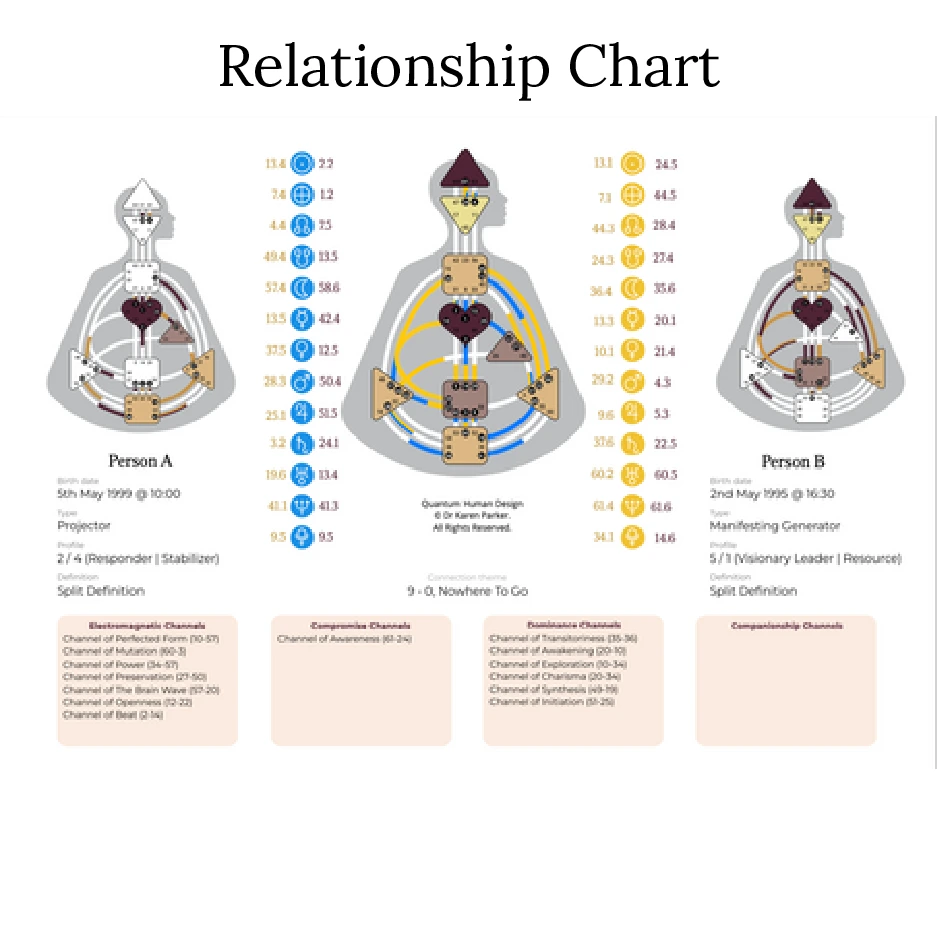
Note: The birth data is completely made up in this example to give you an idea of what a chart looks like.
The 4 Types of Connection Channels
When you look at your connection chart, you’ll notice your channels are categorized into four types. Each creates a different dynamic in your relationship.
Compromise Channels: The Push-Pull Dynamic
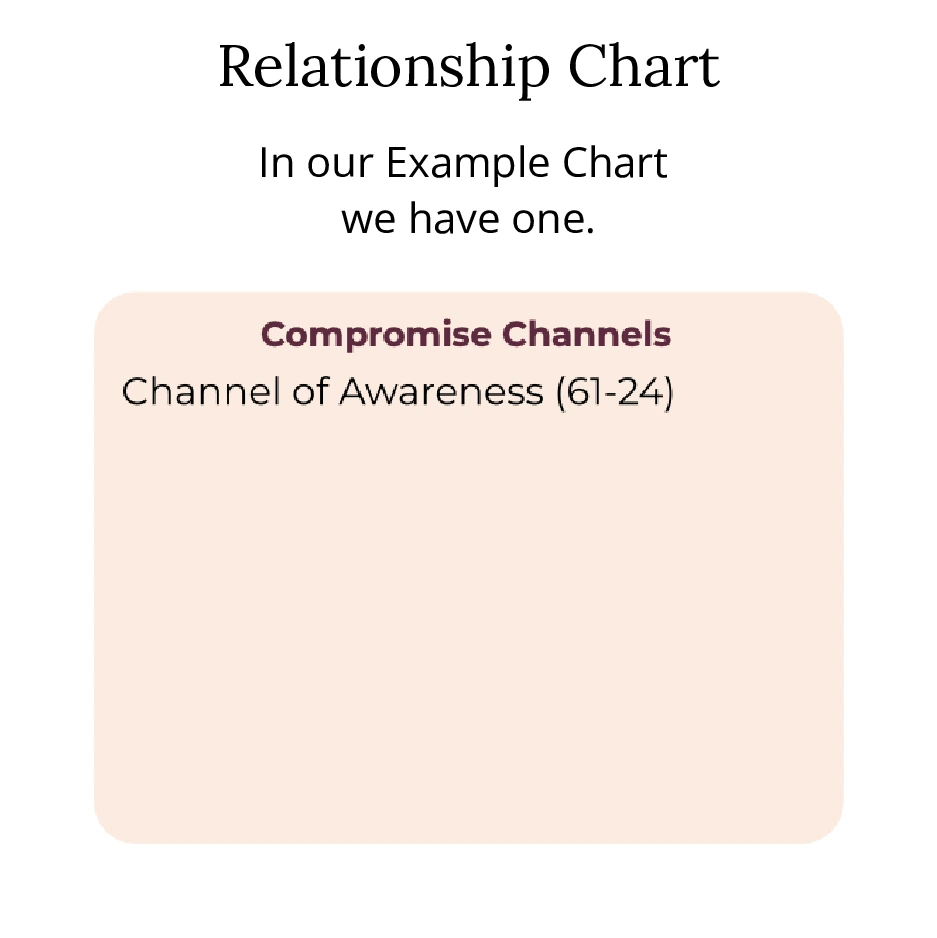
Compromise channels happen when one person has a complete channel (both gates) while the other person only has one gate of that same channel. This creates natural tension because you’re operating with completely different energies in that area.
How it feels: The person with the whole channel will naturally try to pull the other person into their way of doing things. The person with just one gate will feel this pull, but it never quite feels right to them.
Example: Let’s say you have the full 22-12 Channel of Openness (connected to listening and expressing), but your partner only has Gate 22. You might find yourself always choosing what music to listen to or what podcasts to play, while your partner feels like their preferences get overlooked, even when they don’t speak up.
How to navigate it: Accept that you’ll need to “agree to disagree” in these areas. The person with the full channel isn’t trying to be controlling, and the person with one gate isn’t being difficult – it’s just a mechanical issue. Set healthy boundaries and don’t expect the other person to operate in the same way you do in these areas.
Dominance Channels: Natural Teaching Opportunities
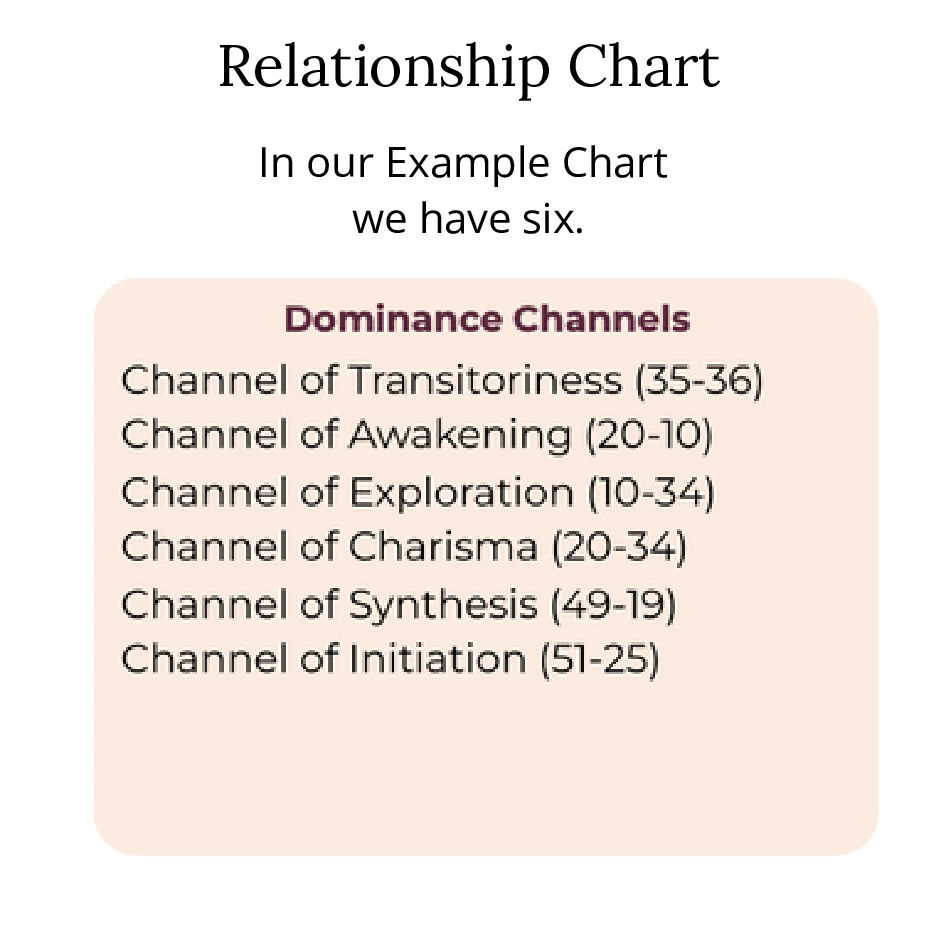
Dominance channels occur when one person has a complete channel and the other person has no gates in that channel. This creates a leader-learner dynamic where the person with the channel consistently conditions the other person with that energy.
How it feels: The person with the channel naturally takes the lead in areas related to that energy. The undefined person gets to experience and learn from that consistent energy, but they shouldn’t be expected to become an expert.
Example: If you have the 43-23 Channel of Structuring (mental pressure and individual knowing) and your partner doesn’t, you might naturally be the one who comes up with insights and solutions. Your partner benefits from your mental processing, but shouldn’t feel pressure to think the same way.
How to navigate it: Embrace the natural leader-learner dynamic. The person with the channel can guide and share their energy, while the undefined person can observe and learn without pressure to master that area themselves.
Companionship Channels: Steady and Stable
Companion channels occur when both people have the same channel defined. You’re operating with identical energy in that area, which creates deep understanding but can lack excitement.
How it feels: You “get” each other entirely in these areas. There’s natural harmony and no conflict, but also no energetic spark or attraction around these channels.
Example: If you both have the 34-57 Channel of Power, you both understand the need for following your gut instincts and the pressure to be productive. You won’t clash in these areas, but you also won’t learn much from each other.
How to navigate it: Appreciate the stability and understanding these channels provide. They create a solid foundation for your relationship, even if they’re not the most exciting aspects.
Electromagnetic Channels: The Attraction-Repulsion Cycle
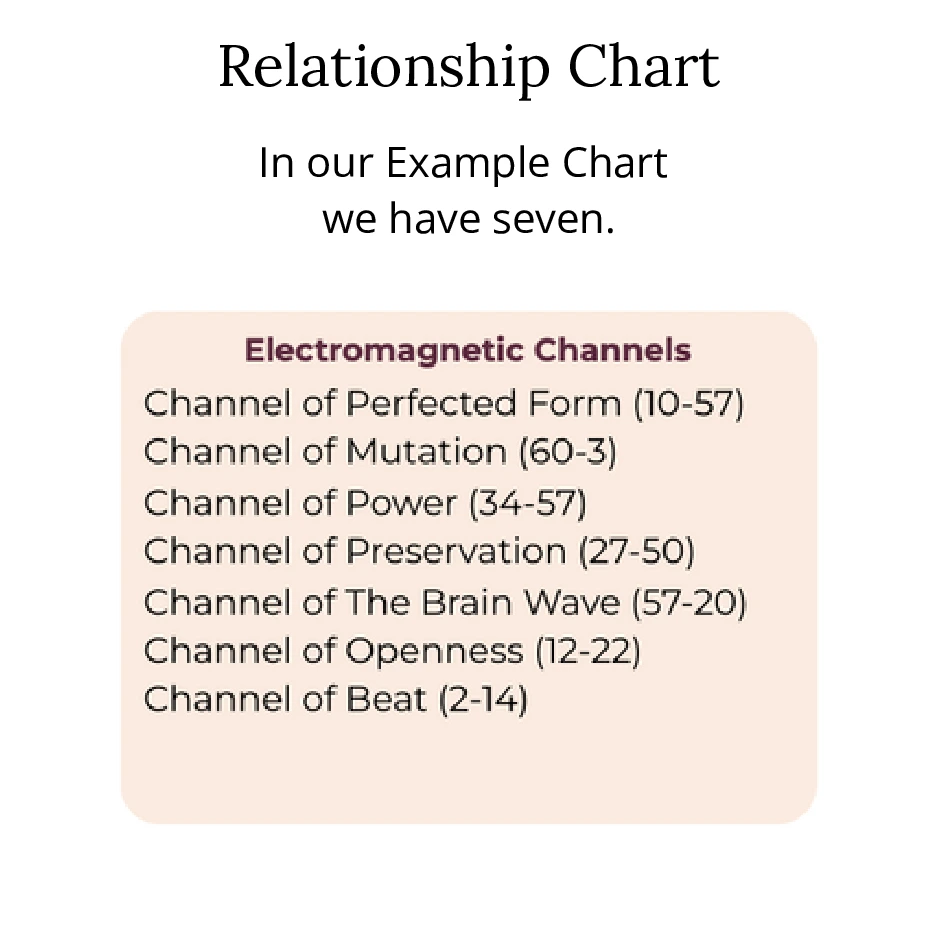
Electromagnetic channels are created when you each have one gate of the same channel – together, you complete the circuit. This creates the most intense and fluctuating energy in relationships.
How it feels: These channels create instant attraction because you each have what the other is “missing.” But this same attraction can flip to repulsion when the energy becomes too intense or overwhelming.
Example: If you have Gate 22 (Openness) and your partner has Gate 12 (Caution), together you create the full channel of emotional expression. Initially, you might be fascinated by how your partner helps you express yourself or how you help them open up. Later, the same dynamic might annoy you – their caution might feel restrictive, or your openness might feel overwhelming to them.
How to navigate it: Expect the oscillation – it’s mechanical, not personal. The key is awareness that these hot-and-cold cycles are a natural part of electromagnetic connections. Don’t take the “cold” phases personally, and don’t get too attached during the “hot” phases.
The 5 Connection Themes: Understanding Your Relationship Dynamic
Beyond individual channels, your connection chart will display an overall theme based on the number of centers defined when your charts are combined. There are five possible themes, each creating a different relationship dynamic.
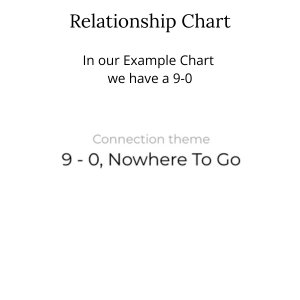
9-0: “Nowhere To Go” – Complete Bonding
When your connection chart shows all nine centers defined, you’ve created what’s called a 9-0 connection theme. This is the most bonded energy possible between two people.
The dynamic: You feel energetically complete together. There’s an intense sense of wholeness and flow when you’re in each other’s presence. Everything feels easier and more harmonious.
The challenge: This complete bonding can become co-dependent. It may be difficult to separate or function independently. In unhealthy relationships, this theme can create a sense of being “trapped” together.
When it works best: When both people have entered the relationship correctly through their Strategy and Authority. The bonding feels nourishing rather than suffocating.
Red flag: If you find yourself unable to leave a relationship that doesn’t feel right just because the energy connection is so strong, pay attention. The 9-0 theme can override your Authority if you’re not careful.
8-1: “Have Some Fun” – Shared Growth
An 8-1 connection means eight centers are defined together, with one center remaining open. This open center becomes your playground for shared experiences and growth.
The dynamic: You feel mostly complete together, but there is room for joint exploration through the undefined center. This theme encourages you to experience the world together through that open energy.
Example: If your Root Center is the undefined one, you might thrive on experiencing pressure and deadlines together, like traveling to new places, attending exciting events, or working on time-sensitive projects as a team.
When it works best: When you actively engage with the undefined center together, rather than ignoring it or trying to fill it separately.
7-2: “Work To Do” – Healthy Independence
With seven centers defined and two open, you have what’s called the “Work To Do” theme. This creates a relationship that needs space and separate interests to thrive.
The dynamic: You feel connected and complete in many areas, but you naturally need breaks from each other. The two open centers often pull you in different directions for your individual growth.
Example: You might find that one person needs to escape into work when stressed, while the other escapes into social activities. Both are healthy – you just recharge differently.
When it works best: When you honor the need for space and don’t take the separate interests personally. This theme strengthens relationships when you give each other room to breathe.
6-3: “Better To Be Free” – Independent Togetherness
The 6-3 theme defines six centers together with three remaining open. This creates strong bonding energy combined with significant independence needs.
The dynamic: You love being together, but you also need your own space and separate activities. You might prefer separate bedrooms, offices, or even living arrangements while maintaining a close relationship.
Example: You might be the couple that works from different parts of the house all day, then comes together for dinner and conversation. The relationship is strong but not clingy.
When it works best: When both people are comfortable with independence and don’t interpret space as rejection. This is perfect for introverts or individuals with a 1/3 profile.
5-4: “Not a Relationship Anymore” – Maximum Difference
When only five centers are defined with four remaining open, you’ve created the most challenging but potentially growth-oriented theme. This is about learning from your complete opposite.
The dynamic: You’re very different people with different approaches to life. This can create either constant conflict or incredible growth opportunities.
The challenge: With so much undefined energy between you, you might have completely different values, interests, and ways of operating in the world.
When it can work: In very conscious, mature relationships where both people are committed to learning from their differences rather than trying to change each other.
Reading Your Connection Chart: A Step-by-Step Guide
Now that you understand the basics, here’s how to analyze your connection chart:
Step 1: Identify Your Connection Theme
Count how many centers are colored in when your charts combine. This gives you your theme number (9-0, 8-1, 7-2, 6-3, or 5-4) and overall relationship dynamic.
Step 2: Look at Your Channel Connections
Scan through each of the four connection types:
- Compromise channels: Where will you need to agree to disagree?
- Dominance channels: Where does each person naturally lead?
- Companionship channels: What do you share and understand about each other?
- Electromagnetic channels: Where do you create attraction and potential tension?
Step 3: Consider Profile Compatibility
While not as important as channel connections, profiles can indicate how well you’ll understand each other’s life approach:
Harmonious profile combinations:
- 6/2 with 3/5
- 1/3 with 4/6
- 2/5 with 5/2
- 1/4 with 4/1
- 2/4 with 5/1
- 6/3 with 3/6
Same profiles (resonant): Deep understanding but potential boredom. All other combinations (dissonant): More challenging but growth-oriented
Step 4: Remember the Bigger Picture
Your connection chart shows mechanics, not destiny. A “challenging” chart doesn’t doom your relationship, and a “perfect” chart doesn’t guarantee success. What matters most is whether you entered the relationship correctly and continue to operate as yourself within it.
Practical Applications: Using Synastry in Real Life
For Romantic Relationships
Understanding your synastry can help you navigate recurring patterns with greater awareness. If you recognize that you have electromagnetic channels, you can anticipate the hot-and-cold cycles without taking them personally. If you have a 7-2 theme, you can plan for healthy separation time instead of viewing it as a problem.
Remember: Never use synastry to override your Authority. If your gut says someone isn’t right for you, trust that feeling regardless of how “compatible” your charts appear.
For Family and Parenting
Synastry can be incredibly helpful for understanding family dynamics. When you see that you have dominance channels with your child, you can guide them in those areas without expecting them to become experts. If you have compromise channels, you can prepare for natural tensions and handle them with more patience.
Key insight: Use this knowledge to prevent you from becoming a negative influence in your children’s lives. Respect their design instead of trying to make them like you.
For Business and Work Relationships
Understanding connection themes can help you structure professional relationships. A 9-0 connection might work well for close business partnerships, while a 7-2 theme might be better for consultant relationships with regular check-ins rather than daily collaboration.
Practical tip: If you’re a coach or service provider, consider how your connection theme with clients affects your service delivery. You might offer different session frequencies or structures based on the natural rhythm of your energetic connection.
Common Pitfalls and What to Avoid
What Human Design Synastry Is NOT
Let’s be clear about what this tool can and cannot do:
- ❌ Not a matchmaking service – Don’t use it to choose partners
- ❌ Not predictive – It won’t tell you if a relationship will succeed
- ❌ Not a reason to end relationships – Challenging charts can work beautifully
- ❌ Not more important than your Authority – Your inner guidance always comes first
Red Flags in Relationship Analysis
Be wary of anyone who:
- Tells you who to date based on your chart
- Guarantees relationship outcomes
- Suggests you ignore your feelings because “the charts are compatible”
- Uses fear tactics about certain connection types
- Analyzes people without their permission
The Healthy Approach
Use Human Design synastry as a tool for awareness and understanding, not decision-making. The goal is to:
- Understand recurring relationship patterns
- Develop compassion for differences
- Navigate challenges with more consciousness
- Appreciate what each person brings to the connection
Getting Started: Your Next Steps
Ready to explore your relationship dynamics? Here’s how to begin:
- Generate your connection chart using our free Human Design Relationship Calculator (see above)
- Start with family or close friends rather than romantic relationships – it’s less emotionally charged
- Focus on understanding, not judging – every connection type has gifts and challenges
- Practice with multiple relationships to see patterns in how you connect with others
- Remember your Authority – use this knowledge to enhance relationships you’ve already determined are correct for you
Frequently Asked Questions (FAQs) About Human Design Synastry
Do I need exact birth times for both people for an accurate Human Design Relationship chart?
Yes, Human Design requires precise birth times for accuracy. Even a few minutes can change the chart significantly.
However you can get a good idea but it won't be as precise.
What's the "best" connection theme in Human Design Synastry?
There's no "best" theme - each has its gifts and challenges. What matters is entering the relationship correctly and honoring both people's designs.
Can "incompatible" Human Design Relationship charts work out?
Absolutely! Compatibility in Human Design isn't about charts matching perfectly. It's about understanding differences and being yourself within the relationship.
Should I tell my partner about their Human Design Design?
Only share what serves the relationship. Don't force Human Design on others or use it to explain their behavior to them.
Can a Human Design Compatibility Chart help save a struggling relationship?
It can bring awareness that reduces conflict, but it won't fix fundamental incompatibilities. Trust your Authority about whether the relationship is correct for you.
What if we have mostly electromagnetic channels in our Human Design Relationship Chart?
Expect intensity and fluctuation. These relationships can be incredibly passionate but also challenging. The key is not taking the cycles personally.
How often should I check our Human Design compatibility charts?
Your charts don't change, so once is enough. Focus on applying the insights rather than repeatedly analyzing.
Building Intentional Relationships
Human Design synastry offers a unique window into relationship dynamics, but remember – it’s just one tool among many. The most important elements of healthy relationships remain timeless: mutual respect, good communication, shared values, and genuine care for each other’s well-being.
Use this knowledge to foster greater awareness and compassion in your relationships. When you understand the mechanics of how you relate to others, you can:
- Navigate conflicts with less blame and more understanding
- Appreciate differences instead of trying to fix them
- Create relationship structures that honor both people’s needs
- Enter new relationships with greater consciousness
The goal isn’t to find someone whose chart perfectly complements yours. It’s about understanding yourself deeply enough to show up authentically in relationships and to develop enough awareness to honor others for who they truly are.
Start by exploring your connection chart with someone close to you. Notice the patterns, but don’t get lost in the analysis. The real magic happens when you bring this awareness into your daily interactions – when you can see the mechanical nature of certain tensions and respond with compassion instead of reactivity.
Your relationships are meant to be laboratories for growth and consciousness, not puzzles to be solved. Human Design synastry simply gives you a map for the territory you’re already exploring together.
Remember: trust your Authority, respect others’ designs, and use this knowledge to love more consciously. That’s where the real, fundamental transformation happens.
Human Design Synastry – Discover it For Yourself.
Ready to explore your relationship dynamics? Try our free Human Design compatibility calculator and discover how you connect with the important people in your life.
You can get your Relationship Chart using the form above.
You can get your individual charts too, so why not download your FREE individual Human Design chart here?
Remember that we all have ALL of the chart. If the Gate is colored in or defined, it’s part of your Soul Curriculum. If it’s white or undefined, it means you learn about this Gate through relationships with others or through the Transits.
At its core, Human Design is a unique system that offers profound insights into your inner self and how you interact with the world around you. Your Human Design chart is a valuable tool that can help you understand your true nature, discover your strengths and weaknesses, and unlock your full potential.
By downloading and reviewing your unique Human Design Chart you are embarking on a journey of self-discovery that will empower you to make conscious choices in all aspects of your life. Your chart is an Energy Blueprint of your unique energy configuration and contains valuable information about your personality traits, your natural talents, and your life purpose. With this knowledge, you’ll navigate life’s challenges with greater ease and clarity.
Human Design is a deeply empowering system that encourages us to embrace our true selves, rewrite our personal narrative, and live in alignment with our inner wisdom. When we align with our authentic nature, we tap into a wellspring of creativity, joy, and fulfillment that flows effortlessly through us.
There’s More – How To Learn More About Human Design
If you are trying to learn and apply Human Design to your life circumstances, but traditional Human Design rings a little off-key, you don’t quite connect with it, or it feels heavy as you read it. We invite you to explore training courses and options with Quantum Human Design, internationally respected and time-tested training courses
These courses will empower you to create a life filled with more money, better relationships, health and vitality, a rewarding career, and experience profound personal transformation.
Do you want to unlock the secrets of Quantum Human Design?
Why not join our on-demand Masterclass and discover the Transformative Power of Quantum Human Design
Curious about the difference between Human Design and Quantum Human Design? Karen Curry Parker explains it in this video:
BOOK NEWS
Quantum Wellness: Healing Your Mind, Body, and Spirit with Human Design

This comprehensive guide teaches readers to:
- Interpret bodily signals and uncover root causes of imbalance
- Utilize individual energetic blueprints for optimal well-being
- Transform limiting beliefs to align with one’s authentic self
This essential resource addresses core issues beyond symptoms, guiding readers on a transformative journey of self-realization and deep healing.
This book blends ancient Human Design wisdom with quantum physics, offering a revolutionary approach to holistic healing and personal transformation. Ideal for holistic practitioners, Human Design enthusiasts, and self-discovery seekers.