While Quantum Human Design and Dr. Karen Parker do not teach Valleys Environment; you may encounter these terms in your journey with Human Design. Quantum Human Design encourages you to always assess information using your Strategy and Authority in determining how to apply, or not apply, this information to your life’s path
Are you someone who thrives in open spaces, feels energized by meaningful conversations, and notices the acoustic quality of your surroundings? You might have a Valleys environment in your Human Design. Understanding this aspect of your design can be transformative, helping you create living and working spaces that support rather than deplete your energy.
In this comprehensive guide, we’ll explore what it means to have a Valleys environment, how to determine if this is your environment type, and practical ways to align your life with your Valleys nature. Whether you’re new to Human Design or looking to deepen your understanding, this article will provide valuable insights to help you work with rather than against your natural tendencies.
What is the Valleys Environment in Human Design?
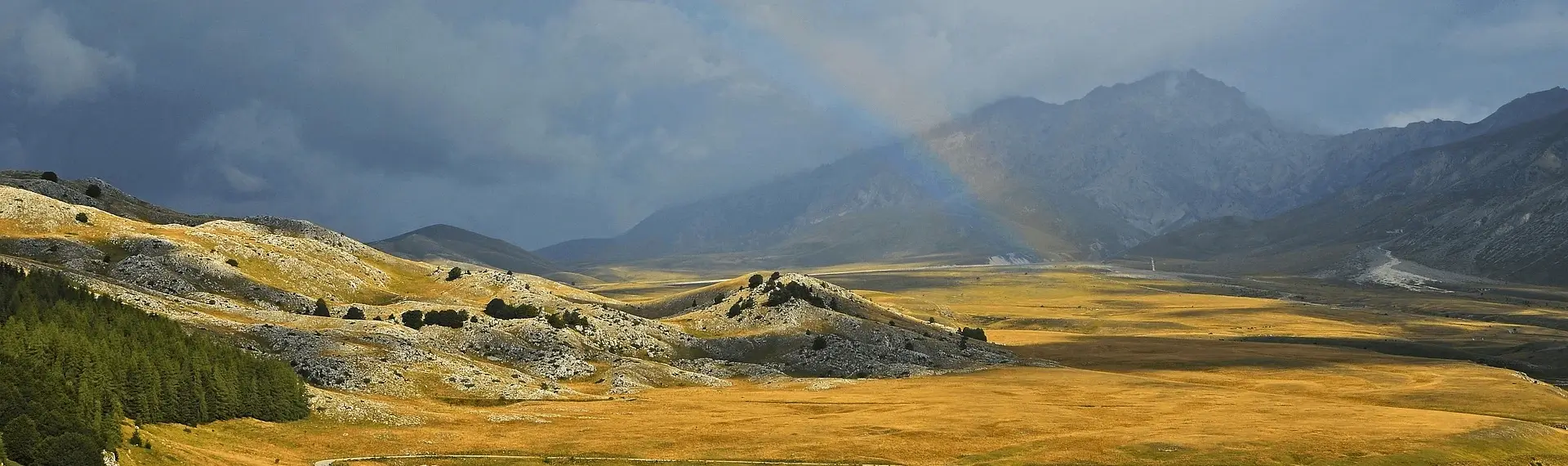
The Valleys environment in Human Design refers to an individual’s inherent need for peaceful, spacious, and open environments. People with this environment type thrive best in settings that evoke the tranquility and openness of a valley – places where they can breathe freely and connect with others in meaningful ways.
Valleys people feel a deep connection with nature, especially vast open spaces that provide a sense of freedom and tranquility. They often enjoy wide, sweeping landscapes and find comfort in spaces where they can see far and wide. This doesn’t mean you must live in an actual valley—it’s more about the quality of the space and how it makes you feel.
How to Determine if You Have a Valleys Environment
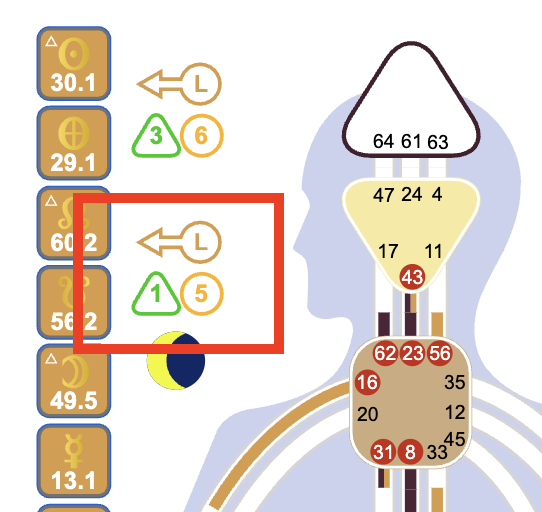
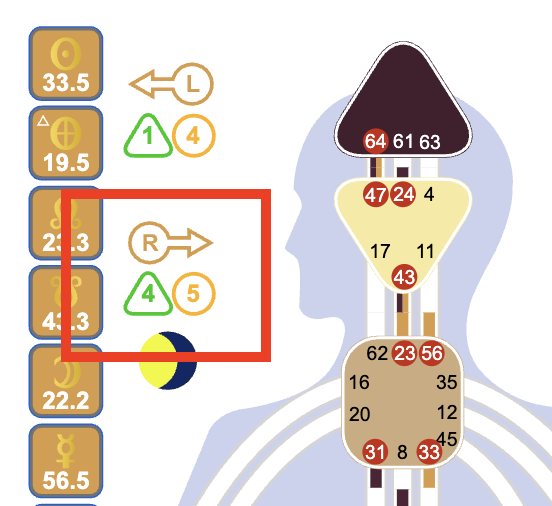
Your environment is determined by the variables in your Human Design chart. Specifically:
- Look at the bottom left arrow (Body/Red Arrow) in your chart
- Check the number in the yellow circle near this arrow (your Color)
- If the number corresponds to Valleys (typically 5), then this is your environment
- The direction the arrow points determines whether you have a Narrow Valleys (left arrow) or Wide Valleys (right arrow) orientation
If you’re not sure how to access this information, our free Human Design calculator can generate your full chart.
Narrow vs. Wide Valleys
If your arrow points left, you have a Narrow Valleys environment. This means you’re energized by your environment and have a gift for creating direct connections with people. You might prefer narrow spaces like hallways, railway apartments, or small streets where sound and meaningful connections are close by.
If your arrow points right, you have a Wide Valleys environment. You’re more relaxed in your environment and need expansive spaces. You’re likely more partial to natural landscapes and actual valleys, places where you take in sounds from farther away.
The Psychological Aspects of a Valleys Environment
At their core, Valleys people have a psychological need for:
- Peace and tranquility: The Valleys Human Design environment type is all about peace and calm – serene, stable, and “chill.”
- Information exchange: Connections and relationships are important to Valleys people because these are how they share information and experience intimacy.
- Acoustic awareness: Sound plays a crucial role in how Valleys people process and interact with their environment.
- Openness: Both physically and emotionally, Valleys people need room to breathe and expand.
Imagine Sarah, a marketing professional with a Valleys environment. She notices that her best ideas come when she’s working in her company’s open-concept office with large windows overlooking a park. The ambient sounds of colleagues quietly working creates a comforting acoustic backdrop. When forced to work in a cramped, windowless conference room for a week-long project, she finds herself irritable and creatively blocked.
Practical Applications for Valleys People
Creating Supportive Indoor Environments
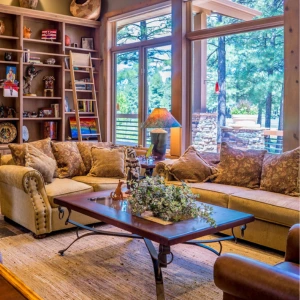
In indoor settings, Valleys people are often drawn to large, open spaces with lots of natural light and minimal clutter. They typically prefer rooms with big windows that provide expansive views or open-concept designs that provide a sense of spaciousness.
To optimize your indoor spaces:
- Declutter regularly to maintain a sense of openness
- Position your desk near windows whenever possible
- Use light colors on walls to create a sense of expansiveness
- Incorporate plants to bring natural elements indoors
- Consider acoustic elements like sound-absorbing panels if you’re sensitive to harsh noises
For those with small living spaces, consider:
- Using mirrors to create the illusion of more space
- Choosing furniture with exposed legs rather than pieces that sit on the floor
- Keeping surfaces clear rather than crowded with decorative items
- Creating zones within your space rather than cramming everything together
Managing Social Dynamics
Valleys were where all kinds of people came together to trade, exchange, and share information. This environment is all about the exchange of energy. Understanding this aspect of your Valleys nature can help you create more fulfilling social connections.
For Valleys people, consider these social strategies:
- Balance solitude and connection: Schedule regular social interactions, but also protect your alone time
- Seek quality conversations: Most of your ‘aha’ moments likely come when you’re in stillness, around other people, like being at a coffee shop, having a massage, or going for a walk in nature.
- Create the right acoustic environment: Headphones can go a long way for Valley People; if you’re in an acoustic environment that is unpleasant for you, noise-canceling headphones can be a saving grace.
Michael, a Valleys person who works from home, realized he was feeling disconnected and uninspired. He started working from a quiet coffee shop two afternoons a week, and his creativity immediately improved. He wasn’t necessarily interacting with others, but simply being in a space with the gentle hum of conversations and activity provided the perfect environment for his Valleys nature.
Career and Productivity Strategies
When it comes to career choices, individuals with the Valleys Environment in their Human Design might be drawn to professions that allow for a sense of openness and tranquility. They might excel in jobs that involve working in large, open spaces or that allow for a sense of freedom and peace.
Potentially suitable career fields include:
- Landscape architecture
- Environmental conservation
- Strategic planning
- Event coordination
- Education (especially in open-concept settings)
- Remote work positions that allow control over your environment
Productivity tips for Valleys people:
- Take regular breaks outdoors if possible, especially in open spaces
- Create a workspace that allows visual expansion—facing a window rather than a wall
- Use acoustic strategies like background sounds (rainfall, gentle music) if it helps you focus
- Schedule “information exchange” time through meetings or conversations that energize rather than deplete
- Protect your environmental needs by communicating them clearly to colleagues and family
The Valleys Survival Kit
For Valleys people, learning to say ‘no’ to create pockets of calm throughout the day is essential. These pockets are incredibly important. Here are essential tools for your “Valleys Survival Kit”:
- Quality headphones: Don’t leave the house without your headphones! For on-the-go entertainment and connection, these are essential for Valleys Human Design people.
- Nature access plan: Identify nearby open spaces you can visit regularly
- Acoustic management tools: White noise machines, sound-absorbing panels, or apps with nature sounds
- Social connectivity tools: Social media can get a bad reputation, but for Valleys people, it can be a healthy way to connect with your community and listen to conversations that interest you.
- Environmental adjustment strategies: Quick ways to create more openness in any space (rearranging furniture, opening windows)
Navigating Challenges for Valleys People
Valleys people face specific challenges that others might not understand:
- Environmental sensitivity: They may find cramped, crowded, or cluttered environments stressful or overwhelming. They might struggle to think clearly or relax fully in such settings.
- Information disconnection: If information in the home or workplace is stifled and communication is a struggle, what was once a healthy place can become very unhealthy for a Valley Person.
- Emotional responses: When a Valleys person lives or works in an environment that isn’t peaceful and stable, they will flip into their not-self theme (like anger) pretty quickly.
Practical solutions include:
- Advocate for your needs: Don’t apologize for requiring certain environmental conditions to thrive
- Create mini-environments: Even in challenging spaces, create your own valley-like microenvironment
- Develop coping strategies: Quick meditation, stepping outside, or using headphones when things get overwhelming
- Seek understanding: Educate those close to you about why certain environments affect you so strongly
Raising Children with Valleys Environment
If you’re parenting a child with a Valleys environment, consider these approaches:
- Create open, peaceful spaces in your home where they can retreat and recharge
- Be mindful of acoustic environments—some Valleys children are highly sensitive to sounds
- Allow for people-watching opportunities where they can observe social dynamics
- Provide information sources that satisfy their need for connection and exchange
- Respect their need for spaciousness even in small living quarters
Educational settings:
- Advocate for seating near windows or in less crowded areas of the classroom
- Discuss with teachers the importance of acoustic environments for your child
- Consider schools with more open, nature-connected designs if possible
- Help your child develop strategies for self-regulation in challenging environments
Comparing Valleys Environment to Other Human Design Environments
To better understand the unique qualities of the Valleys environment, let’s compare it to the other five environment types in Human Design:
Valleys vs. Caves
While Valleys people thrive in open, expansive spaces, Caves people need:
- Enclosed, secure spaces that feel protected
- Control over who enters their environment
- Predictability in their surroundings
- Clear boundaries between their space and others
Caves environment is all about creating stability and security. If you think of caves, they are enclosed spaces where it almost feels like you know all that is around you. It feels private, embracing, cozy, secure, and protected.
Valleys vs. Markets
Valleys people focus on acoustic qualities and information exchange, while Markets people need:
- Environments where business and exchange happen
- Networking and transaction-based interactions
- Connection through professional relationships
- Discernment and selectivity about their spaces
Markets environment people thrive in places where some kind of exchange is happening, e.g., in a business environment or being around makers. They often find they are closest to those they work with.
Valleys vs. Kitchens
Valleys focus on peaceful expansion, whereas Kitchens people need:
- Creative, buzzy, busy environments
- Spaces where transformation is happening
- Being at the center of action and creation
- Feeling like things around them are changing
Kitchens people love being in spaces where it feels like things are happening, and they can be at the center of the action. An ideal space often feels creative, buzzy, and busy.
Valleys vs. Mountains
Valleys are about ground-level perspective and acoustics, while Mountains people need:
- Elevated positions with perspective
- The ability to see the full picture
- Being tucked away but with access to the big picture
- Height and overview of their surroundings
Mountains people don’t need to literally live in the mountains, but there is something about having a high perspective that suits them. Being able to see the full picture of their environment is soothing.
Valleys vs. Shores
Valleys focus on openness and acoustic properties, while Shores people need:
- Places of duality and contrast
- Being at thresholds between different environments
- The ability to cross over between different worlds
- Experiencing multiple perspectives
Shores are all about seeing where two distinct environments come together. The Natural Shore is a true shore, where water comes together with land. The Artificial Shore is the edge of two non-natural environments.
Practical Examples of Valleys Environment in Daily Life
Morning Routine Example
Julia, a Wide Valleys person, starts her day by:
- Opening her curtains wide to see the expansive view from her apartment
- Playing gentle background music while she prepares breakfast
- Taking 15 minutes to sit on her balcony, observing the neighborhood activity below
- Reading news briefs to stay connected to the information flow
Workspace Example
Mark, a Narrow Valleys person, has arranged his office to include:
- A desk positioned to face the open office (rather than a wall)
- Noise-canceling headphones for when the environment becomes too chaotic
- Regular coffee breaks in the building’s atrium, where he can people-watch
- A small plant collection to bring natural elements into his space
Social Setting Example
Elena, with a Valleys environment, manages social gatherings by:
- Choosing venues with open seating areas and good acoustics
- Taking short breaks to step outside when feeling overwhelmed
- Positioning herself where she can observe interactions while participating
- Limiting time in crowded, noisy environments that drain her energy
Frequently Asked Questions (FAQs) About Valleys Environment
Can I have a Valleys environment if I’m an introvert?
Absolutely. Being a Valleys person doesn’t mean you need constant social interaction. It’s more about the quality of your environment and how information flows to you. Many introverted Valleys people enjoy quiet, open spaces where they can observe from a distance or engage selectively with others. The key is finding the right balance between connection and solitude that works for your unique energy.
Does having a Valleys environment mean I can only live in rural areas?
Not at all. While natural valleys are one expression of this environment, Valleys people can thrive in urban settings too. The important factors are openness, acoustic quality, and information flow, not necessarily geographic location. An apartment with big windows in a walkable neighborhood might perfectly suit a Valleys person. It’s about creating or finding environments that have valley-like qualities.
How does my Valleys environment interact with other aspects of my Human Design?
Your environment is just one piece of your Human Design puzzle. It works in conjunction with your Type (Manifestor, Generator, Manifesting Generator, Projector, Reflector), Authority, Profile, and other variables. For example, a Projector with a Valleys environment might need more alone time in open spaces to process information before sharing their insights, while a Manifesting Generator with Valleys might create dynamic, fluid environments that still maintain openness.
I live with someone who has a different environment. How can we create a space that works for both of us?
Compromising on environmental needs requires creativity and communication. Consider:
- Creating designated zones in your home that cater to each person’s environment type
- Alternating between different environments for shared activities
- Using flexible design elements that can transform a space depending on who’s using it
- Discussing and understanding each other’s environmental needs to build empathy
How strictly should I follow the Valleys environment guidelines?
Human Design offers guidance, not rigid rules. Think of your environment variable as a compass rather than a map—it points you in a general direction but doesn’t dictate exactly how to get there. Experiment with different interpretations of Valleys environments and notice how they affect you. Trust your experience over any external “should.”
Can my environment type change over time?
Unlike some aspects of Human Design, your environment type doesn’t change—it’s calculated based on your birth data. However, your awareness and implementation of your environment needs may evolve. Many people find they intuitively seek their correct environment even before learning about Human Design, and this awareness deepens with time.
I work in a cramped office with no windows. What can I do as a Valleys person?
When you can’t change your physical environment, focus on what you can control:
- Take regular breaks to step outside into open areas
- Use images of open landscapes as your desktop background or wall art
- Position mirrors strategically to create the illusion of more space
- Use headphones with nature sounds that evoke open spaces
- Negotiate for flexible work arrangements that allow some remote work in better environments
How do seasons and weather affect Valleys people?
Many Valleys people notice their energy shifts with seasonal changes. Winter can be challenging if it limits access to open outdoor spaces, while spring and summer might feel more aligned with their environmental needs. Creating indoor environments that maintain the essence of Valleys qualities becomes especially important during adverse weather. Some Valleys people are also sensitive to air pressure changes and may feel more comfortable in certain climates over others.
Thriving in Your Valleys Environment
Understanding your Valleys environment in Human Design isn’t about limiting yourself—it’s about recognizing your natural tendencies and creating conditions that allow you to thrive. By honoring your need for openness, acoustic awareness, and information exchange, you can dramatically improve your well-being, productivity, and relationships.
Remember that Human Design offers guidance, not rigid rules. Experiment with different environments and notice how they affect your energy, mood, and effectiveness. Over time, you’ll develop an intuitive sense for the spaces and situations that best support your Valleys nature.
Your environment isn’t just where you exist—it’s an integral part of how you experience and interact with the world. By aligning your surroundings with your Valleys design, you’re not just changing your environment; you’re unlocking your authentic potential.
Valleys Environment in Human Design – Do You Have This in Your Chart?
Get Your FREE Human Design Chart to check it out.
Why not download your FREE Human Design chart here to find out?
Remember that we all have ALL of the chart. If the Gate is colored in or defined, it’s part of your Soul Curriculum. If it’s white or undefined, it means you learn about this Gate through relationships with others or through the Transits.
At its core, Human Design is a unique system that offers profound insights into your inner self and how you interact with the world around you. Your Human Design chart is a valuable tool that can help you understand your true nature, discover your strengths and weaknesses, and unlock your full potential.
By downloading and reviewing your unique Human Design Chart you are embarking on a journey of self-discovery that will empower you to make conscious choices in all aspects of your life. Your chart is an Energy Blueprint of your unique energy configuration and contains valuable information about your personality traits, your natural talents, and your life purpose. With this knowledge, you’ll navigate life’s challenges with greater ease and clarity.
Human Design is a deeply empowering system that encourages us to embrace our true selves, rewrite our personal narrative, and live in alignment with our inner wisdom. When we align with our authentic nature, we tap into a wellspring of creativity, joy, and fulfillment that flows effortlessly through us.
There’s More – How To Learn More About Human Design
If you are trying to learn and apply Human Design to your life circumstances, but traditional Human Design rings a little off-key, you don’t quite connect with it, or it feels heavy as you read it. We invite you to explore training options with Quantum Human Design, internationally respected and time-tested training courses.
These courses will empower you to create a life filled with more money, better relationships, health and vitality, a rewarding career, and experience profound personal transformation.
Do you want to unlock the secrets of Quantum Human Design?
Why not join our on-demand Masterclass and discover the Transformative Power of Quantum Human Design
Curious about the difference between Human Design and Quantum Human Design? Karen Curry Parker explains it in this video:
BOOK NEWS
Quantum Wellness: Healing Your Mind, Body, and Spirit with Human Design

This comprehensive guide teaches readers to:
- Interpret bodily signals and uncover root causes of imbalance
- Utilize individual energetic blueprints for optimal well-being
- Transform limiting beliefs to align with one’s authentic self
Dr. Parker provides practical tools to unlock potential and create purposeful, vibrant lives.
This essential resource addresses core issues beyond symptoms, guiding readers on a transformative journey of self-realization and deep healing.
This book blends ancient Human Design wisdom with quantum physics, offering a revolutionary approach to holistic healing and personal transformation. Ideal for holistic practitioners, Human Design enthusiasts, and self-discovery seekers.