While Quantum Human Design and Dr. Karen Parker do not teach Caves or Environment, you may encounter these terms in your journey with Human Design. Quantum Human Design encourages you to always assess information using your Strategy and Authority in determining how to apply, or not apply, this information to your life’s path.
Introduction to Caves Environment
Human Design offers various frameworks to understand our interactions with the world, with Environment types being one of those that can be practical and simple to implement. Among these, the Caves Environment focuses on individuals who naturally flourish in settings offering privacy, protection, and a sense of seclusion.
The Caves designation isn’t about literally living in caves. Rather, caves symbolize your innate preference for spaces providing security and sanctuary. Understanding this aspect of yourself can transform how you interact with your surroundings and dramatically improve your wellbeing, focus, and authentic expression.
Characteristics of Caves People
Those with the Human Design Caves Environment in their Human Design typically share several traits. Most notably, they thrive when they have access to private, secure spaces where they can retreat as needed. This environmental preference influences everything from their home design to their workplace productivity.
Caves individuals often feel crystal clear focus and blooming creativity when working in protected settings. They process information deeply and engage more authentically when they feel safe from interruptions or unexpected intrusions. This environment isn’t about being antisocial. Rather, it reflects a genuine need for controlled interaction with the external world.
You might notice that your energy levels fluctuate significantly based on your environment. Open, exposed spaces with multiple entry points may leave you feeling drained or on edge, while enclosed areas with limited access points help you feel centered and rejuvenated.
Signs You Might Be a Caves Person
Recognizing your Caves nature often begins with noticing patterns in your environmental preferences. Consider these common indicators:
- You instinctively select seating positions that protect your back, particularly choosing booths in restaurants or back-row seats in theaters
- You experience discomfort when people approach from behind without warning
- You frequently seek refuge in naturally enclosed spaces like bathrooms or closets when feeling overwhelmed
- Solo car time feels particularly restorative and peaceful
- You enjoy creating “nests” or cozy corners in your living spaces
- As a child, you gravitated toward building forts, creating hiding spots, or playing in enclosed structures
- You prefer basement apartments or spaces with minimal windows
- You find yourself lingering in shower stalls or bathtubs with curtains drawn
These tendencies aren’t random quirks but meaningful signals about your optimal environmental conditions for wellbeing.
Creating Your Ideal Caves Environment at Home
Transforming your living space to honor your Caves nature doesn’t require major renovations. Small intentional adjustments can enhance security and comfort:
Start by identifying potential retreat spaces in your current home. Look for corners, alcoves, or smaller rooms that could become dedicated sanctuaries. Even a transformed closet or area beneath a loft bed can serve as a perfect personal cave.
Lighting plays a crucial role for Caves individuals. Replace harsh overhead lighting with soft, ambient options like floor lamps, salt lamps, or string lights. Warm-toned bulbs (2700-3000K) create a more nurturing atmosphere than cool white lighting. Dimmable options allow you to adjust illumination based on your needs.

Furnish your space with items that create physical and psychological comfort. Deep-seated couches, oversized chairs, and plush floor cushions all provide enclosure. Position furniture against walls rather than floating in open spaces whenever possible.
Basements aren’t just for storage! Their natural underground positioning, limited entry points, and typically subdued lighting make them ideal environments for Caves individuals to recharge and focus.
Caves Environment On-the-Go
Maintaining your environmental preferences outside your home requires portable solutions and strategic choices:
Develop a personal “Caves kit” for travel and daily outings. This might include oversized scarves that can create privacy screens, noise-canceling headphones to create auditory boundaries, and electronic devices with dark-mode settings activated.
Your wardrobe can become a mobile cave: Incorporate hooded garments, high-collared items, and wraps that can create instant boundaries when needed. Oversized hoods provide momentary darkness and enclosure even in crowded settings.
When dining out, request corner or booth seating that shields your back. Arriving early to secure preferred positioning prevents the discomfort of being seated in exposed central areas.
Vehicles often serve as perfect mobile sanctuaries for Caves individuals. Keep your car clutter-free and equipped with comfort items that enhance its cave-like qualities.
Even spending a few minutes in your parked car before entering a stressful environment can help recenter your energy.
Caves Environment and Relationships
Communicating your environmental needs to others prevents misunderstandings and helps create supportive dynamics:
Share your Caves nature with close connections using simple, practical examples rather than abstract explanations. “I feel most relaxed and present when my back is protected,” conveys your needs more effectively than complex design terminology.
Establish clear boundaries around personal space while emphasizing that your need for seclusion isn’t rejection. Phrases like “I need some alone time to recharge so I can be fully present later” help partners understand your withdrawal isn’t personal.
Request that family members and close friends announce their presence before entering your space, especially from behind. This simple courtesy prevents triggering your defensive responses.
Creating a personal “cave zone” in shared living spaces gives you dedicated retreat areas while maintaining connection. Work with roommates or family to designate certain areas as quiet, protected spaces where interruptions are minimized.
Caves Environment in the Workplace
Professional settings often present challenges for Caves individuals, but strategic adaptations can dramatically improve your productivity and satisfaction:
Career paths involving private workspaces naturally accommodate Caves needs: Research, writing, programming, laboratory work, accounting, and certain creative fields often provide the seclusion that helps you thrive.
When navigating open-office environments, create micro-caves with strategic positioning. Request desks against walls or in corners, use noise-canceling headphones, and consider privacy screens to establish boundaries.
Remote work arrangements may significantly benefit your productivity. If full-time remote work isn’t possible, negotiate hybrid schedules that allow focused work from your optimal home environment.
Communicate your environmental preferences professionally, focusing on productivity benefits rather than personal comfort. Framing requests in terms of improved output and concentration typically receives better reception than personal preference explanations. “I focus better and have better productivity when I work from home. What are the remote or hybrid options available?”
Caves Children: Supporting Their Environment Needs
Young Caves individuals benefit tremendously from caregivers who understand their environmental requirements:
Watch for signs of Caves tendencies in children—seeking enclosed play spaces, building blanket forts, hiding under furniture, or retreating to closets. These behaviors aren’t concerning when understood as natural environmental preferences.
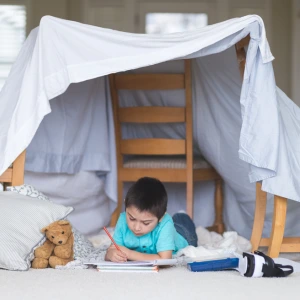
Create dedicated sanctuary spaces where Caves children can retreat safely. This might be a tent in their bedroom, a reading nook with curtains, or a transformed closet with cushions and soft lighting.
Establish approach protocols to prevent startling Caves children. Teach family members to verbally announce themselves before entering the child’s space.
Respect their need for processing time in secure environments after stimulating activities. A quiet car ride or time in their sanctuary space helps them integrate experiences before moving to the next activity.
Caves Environment Survival Kit
Assemble these essential items to enhance any environment for Caves compatibility:
Comfort Layers: Weighted blankets provide gentle pressure that mimics the enclosure of a protected space. Look for options weighing approximately 10% of your body weight for optimal benefit.
Lighting Solutions: Adjustable lighting transforms any space. Include small clip-on reading lights, portable light filters for harsh environments, and battery-operated string lights for travel.
Visual Boundaries: Eye masks serve multiple purposes, creating instant darkness during travel and offering quick sensory breaks in overwhelming situations.
Sound Management: High-quality headphones with noise-cancellation features establish auditory boundaries in chaotic environments.
Digital Settings: Configure electronic devices with dark mode, night shift, and reduced notifications to create digital sanctuary spaces.

Embracing Your Caves Nature
Understanding your Caves Environment isn’t about imposing limitations on your life. It is about embracing liberation. Recognizing your environmental preferences allows you to intentionally design spaces that support your most authentic, natural functioning. It’s not about hiding away from the world; it’s about creating a sanctuary where your energy can be replenished and your true self can emerge with confidence.
The most successful Caves individuals find a dynamic balance between retreat and engagement. They use their protected spaces not as places of permanent isolation, but as vital zones to recharge, reset, and prepare for meaningful interactions with the outside world. This harmony between security and connection doesn’t just enhance personal well-being—it also fosters deeper, more resilient relationships and enables more sustainable creativity and productivity over the long term.
Remember, your environmental needs are not flaws, personal weaknesses, or signs of antisocial tendencies. They are valid biological requirements, rooted in your design. Honoring these needs unapologetically is not only an act of self-respect—it’s a powerful strategy for thriving in every area of your life, from work to relationships to personal growth.
As you begin implementing the strategies outlined in this guide, stay curious and observant. Pay close attention to subtle shifts in your energy levels, focus, mood, and overall well-being. Often, the most effective adaptations arise not from rigidly following one-size-fits-all advice but from thoughtful experimentation, reflection, and fine-tuning based on your personal experiences.
Your perfect cave is waiting for you—not necessarily carved from stone or tucked away in a forest, but built through a series of intentional, meaningful choices. By honoring your unique environmental needs, you lay the groundwork for a life that feels not just safe, but vibrantly alive.
Human Design Caves Environment – Do You Have This in Your Human Design?
Get Your FREE Human Design Chart to check it out.
Why not download your FREE Human Design chart here to find out?
Remember that we all have ALL of the chart. If the Gate is colored in or defined, it’s part of your Soul Curriculum. If it’s white or undefined, it means you learn about this Gate through relationships with others or through the Transits.
At its core, Human Design is a unique system that offers profound insights into your inner self and how you interact with the world around you. Your Human Design chart is a valuable tool that can help you understand your true nature, discover your strengths and weaknesses, and unlock your full potential.
By downloading and reviewing your unique Human Design Chart you are embarking on a journey of self-discovery that will empower you to make conscious choices in all aspects of your life. Your chart is an Energy Blueprint of your unique energy configuration and contains valuable information about your personality traits, your natural talents, and your life purpose. With this knowledge, you’ll navigate life’s challenges with greater ease and clarity.
Human Design is a deeply empowering system that encourages us to embrace our true selves, rewrite our personal narrative, and live in alignment with our inner wisdom. When we align with our authentic nature, we tap into a wellspring of creativity, joy, and fulfillment that flows effortlessly through us.
There’s More – How To Learn More About Human Design
If you are trying to learn and apply Human Design to your life circumstances, but traditional Human Design rings a little off-key, you don’t quite connect with it, or it feels heavy as you read it. We invite you to explore training options with Quantum Human Design, internationally respected and time-tested training courses.
These courses will empower you to create a life filled with more money, better relationships, health and vitality, a rewarding career, and experience profound personal transformation.
Do you want to unlock the secrets of Quantum Human Design?
Why not join our on-demand Masterclass and discover the Transformative Power of Quantum Human Design
Curious about the difference between Human Design and Quantum Human Design? Karen Curry Parker explains it in this video:
BOOK NEWS
Quantum Wellness: Healing Your Mind, Body, and Spirit with Human Design

This comprehensive guide teaches readers to:
- Interpret bodily signals and uncover root causes of imbalance
- Utilize individual energetic blueprints for optimal well-being
- Transform limiting beliefs to align with one’s authentic self
Dr. Parker provides practical tools to unlock potential and create purposeful, vibrant lives.
This essential resource addresses core issues beyond symptoms, guiding readers on a transformative journey of self-realization and deep healing.
This book blends ancient Human Design wisdom with quantum physics, offering a revolutionary approach to holistic healing and personal transformation. Ideal for holistic practitioners, Human Design enthusiasts, and self-discovery seekers.