
Motivation in Human Design
In today’s fast-paced world, finding genuine motivation can feel like searching for water in a desert. We’re bombarded with productivity hacks, morning routines, and motivation techniques that promise to unlock our potential. Yet despite this abundance of advice, many people still struggle to find and maintain authentic drive in their lives.
As a practitioner of Human Design, you have huge advantages over those who don’t understand the basic elements of their makeup and authenticity.
Unfortunately, most Human Design teaching approaches motivation through a specific lens of variables and colors, which correlate to six basic motivational forces:
- Fear
- Hope
- Desire
- Need
- Guilt
- Innocence
This framework, while valuable for initial understanding, only scratches the surface of human potential and drive.
As noted by Karen Curry Parker’s revolutionary approach, Human Design Motivation is far more nuanced and multifaceted than these six basic drivers would suggest.
Karen doesn’t teach Human Design Motivation. It’s too easy to want to codify and label parts of the chart, such as the Motivation, without looking at the synthesis of all of the parts of the chart and the entire story that the chart reveals. When we grossly simplify this process by only looking at one element to tell us “everything” about important aspects of life – such as drive – we miss the main point of the chart.
Your chart does not reveal what you are, but HOW you are. In addition, every element in the chart represents a potential with a shadow side and a high side. We’re not a “this” or a “that”. We are living possibilities that are responsive to life in every single moment of our existence. It’s up to us to consciously choose how we’re going to respond and how to de-condition ourselves to increase our capacity to make great choices.
Traditional Human Design Motivation Beliefs Are Limited and Insufficient
The limitation of viewing motivation solely through these traditional variables becomes apparent when we consider the rich complexity of human experience. Our motivations shift and evolve based on numerous factors: our Type’s unique energy signature, our Authority’s decision-making wisdom, our Profile’s life theme, and the dynamic interaction between our defined and undefined centers. Each of these elements contributes to a more sophisticated and personalized understanding of what truly drives us.
Consider how a Generator’s satisfaction differs from a Projector’s success, or how a Manifestor’s peace varies from a Reflector’s surprise. These unique markers of alignment aren’t just feedback mechanisms—they’re sophisticated motivational guides that can inform every aspect of our lives. When we expand our view beyond basic, traditional motivational teachings, we discover a complex tapestry of authentic elements that can motivate and sustain us through both challenges and triumphs.
This Broader Perspective on Motivation Through Human Design Offers Several Key Advantages
- It acknowledges the uniqueness of each individual’s energy blueprint
- It recognizes that motivation flows naturally when we align with our design
- It moves beyond simplistic carrot-and-stick approaches to human behavior
- It provides practical tools for sustained, authentic drive
- It honors the body’s wisdom in guiding motivational forces
The one-size-fits-all approach to Human Design motivation has failed us precisely because it ignores our inherent diversity. Human Design reveals that what motivates one person may completely de-energize another. Understanding this truth liberates us from the shoulds and musts that often burden traditional motivational advice.
As we explore the depths of Human Design’s wisdom about motivation, we’ll discover how various aspects of our chart—from our Channels to our Gates to our Profile—can illuminate our path to sustained, authentic drive. This isn’t about forcing ourselves into predetermined motivational boxes; it’s about understanding and working with our natural energy patterns to create meaningful momentum in our lives.
The journey ahead involves unlearning many conventional beliefs about motivation while embracing a more nuanced and personalized approach. Through this exploration, you’ll discover that true motivation isn’t something to be found or forced—it’s a natural emergence of living in alignment with your unique design.
The Foundation of Motivation in Human Design
A. Energy Centers
Understanding how energy flows through your Human Design centers is crucial for recognizing and working with your natural motivational patterns. Each center, when defined or undefined, contributes uniquely to your motivational landscape.
1. Sacral Center (The Evolutionary Center)
The Sacral Center represents our most powerful and sustainable source of life force energy. Unlike the adrenaline-based energy that many rely on, Sacral energy is regenerative and lasting when properly channeled.
Key Motivational Aspects:
For defined Sacrals:
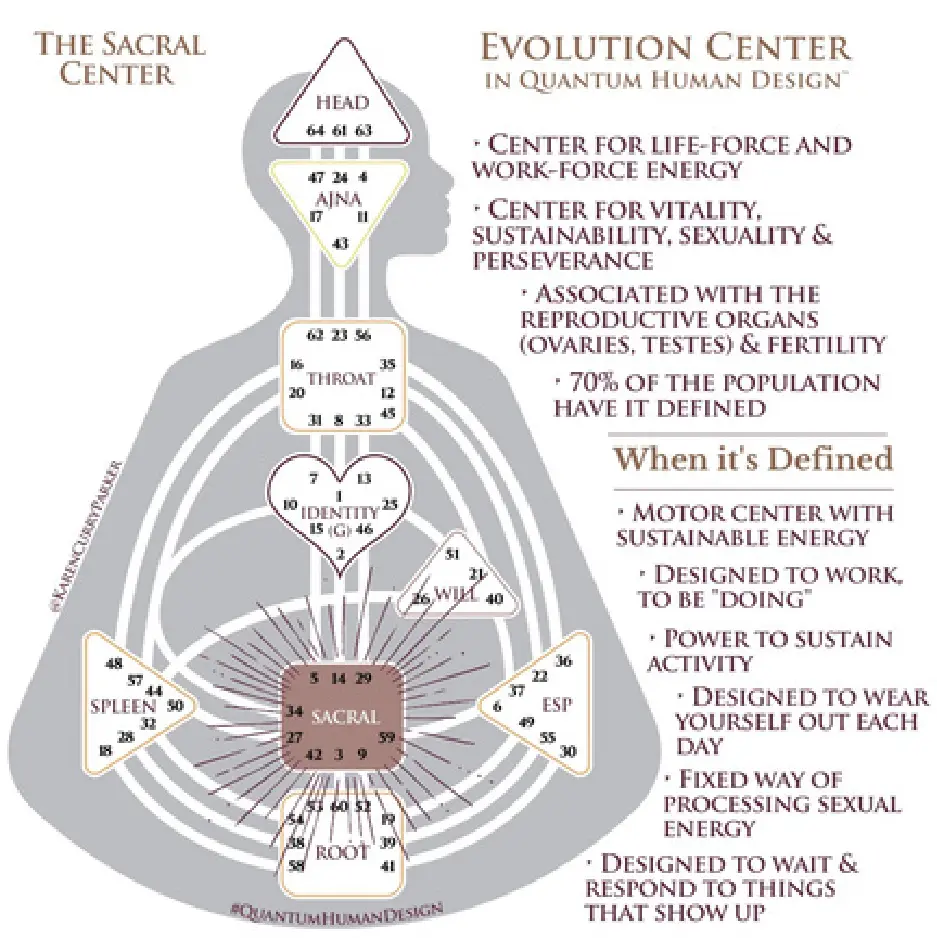
- The ability to recognize and trust gut responses (“uh-huh” and “un-uhn”)
- Sustainable energy when responding to what lights you up
- Natural boundaries that prevent burnout
- Clear signals when it’s time to engage or disengage
For undefined Sacrals:
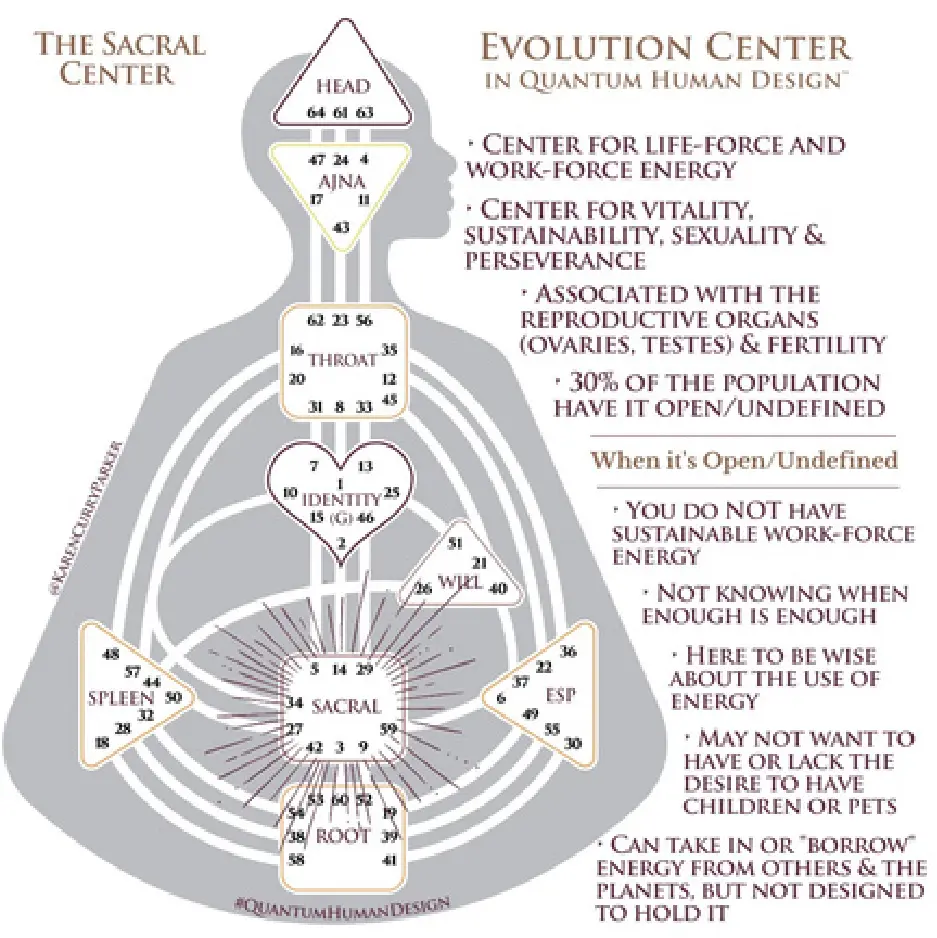
- Wisdom about how others use their energy
- Ability to reflect and amplify others’ life force
- Need for clear boundaries to prevent energy depletion
- Importance of honoring personal energy cycles
2. Will/Ego Center (The Resource Center)
The Will Center (Ego) relates to willpower, determination, and our relationship with value and worth. Its influence on motivation goes far beyond simple drive.
Motivational Patterns:
Defined Will:
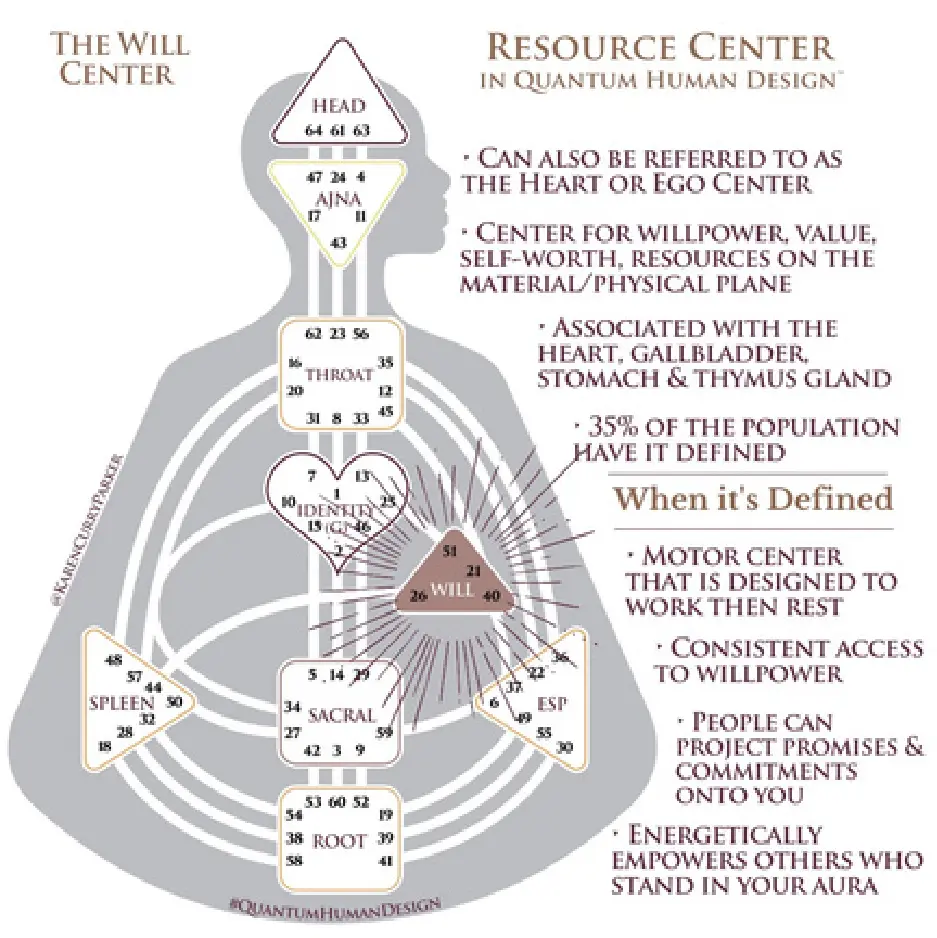
- Consistent access to willpower
- Natural ability to make and keep promises
- Reliable sense of self-worth
- Cycles of pushing forward and resting
Undefined Will:
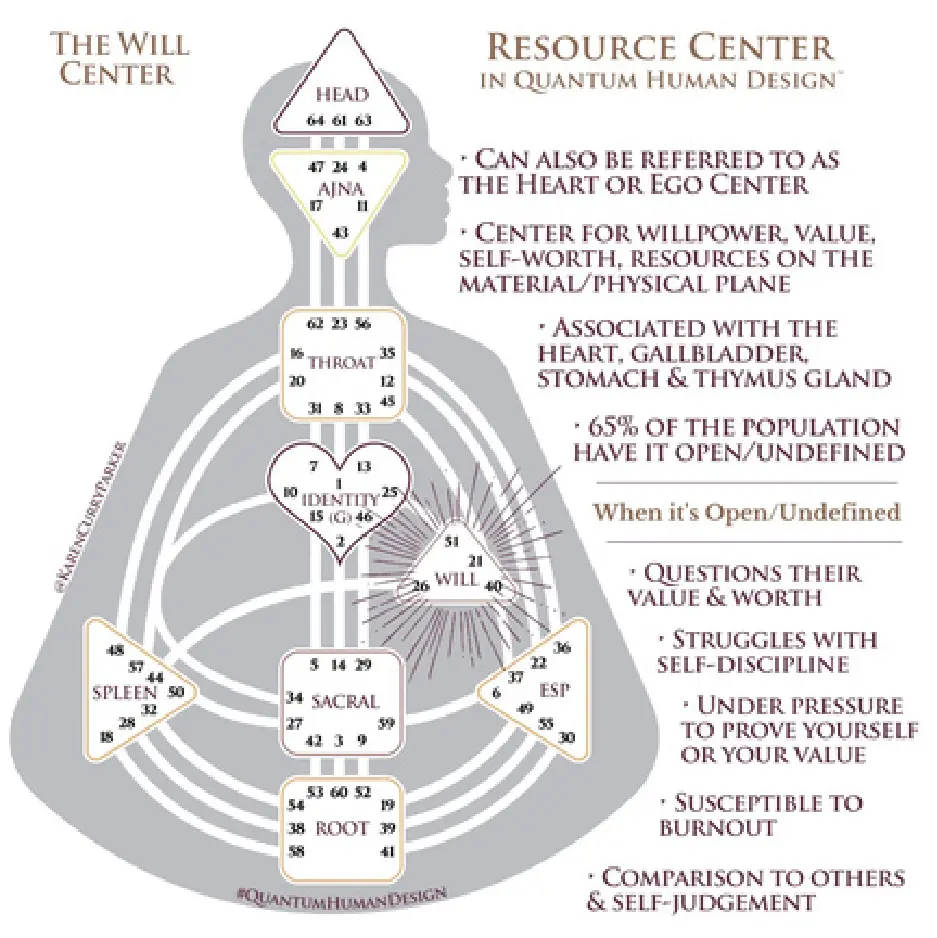
- Flexible relationship with value
- Wisdom about others’ use of willpower
- Need for clear boundaries around promises
- Protection against proving self-worth
3. Root Center (Divine Timing Center)
The Root Center generates pressure and stress that can be transformed into profound motivation when properly understood and managed.
Key Features:
Defined Root:
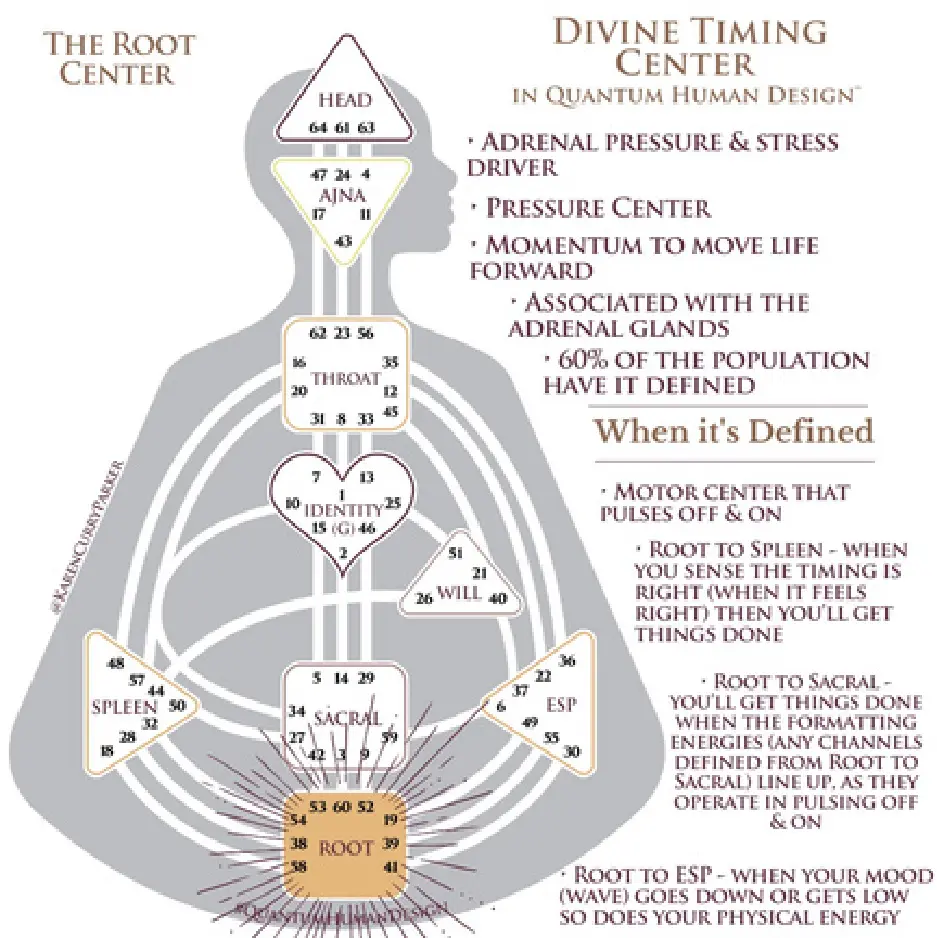
- Consistent ability to handle pressure and act when the timing is right
- Natural timing for stress release
- Built-in cycles of pressure and relief
- Clear signals for when to move forward
Undefined Root:
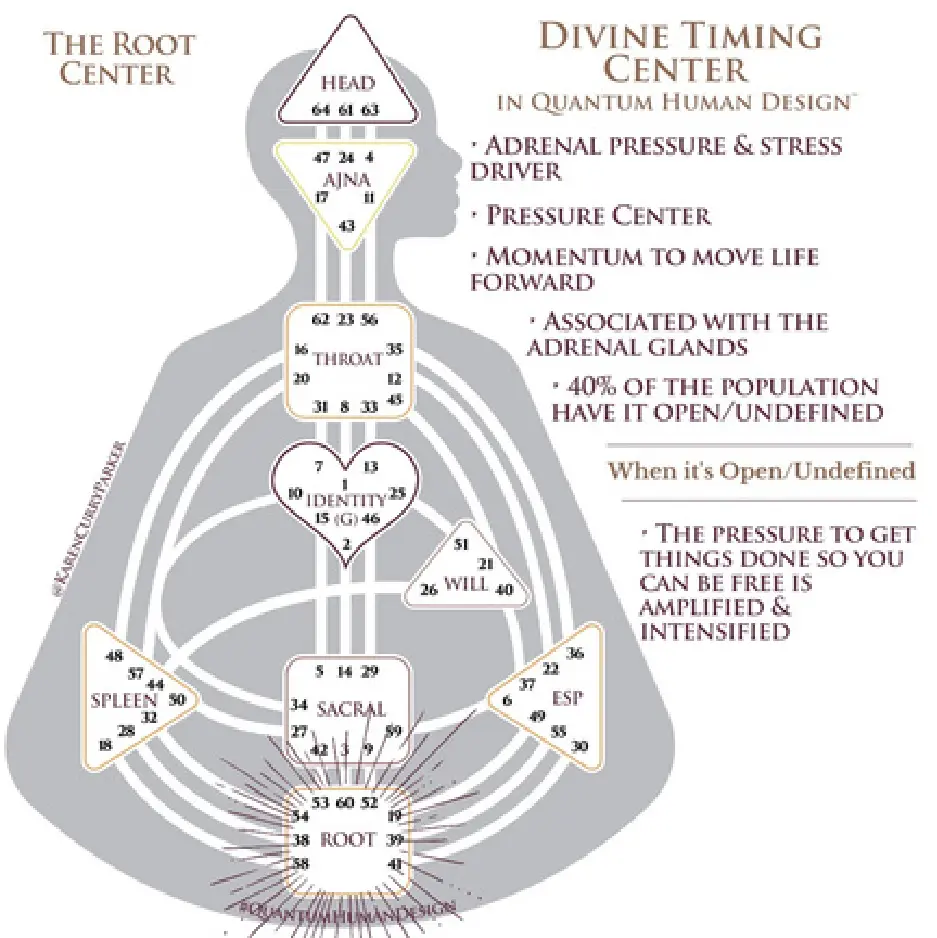
- Sensitivity to external pressure
- Wisdom about stress and timing
- Need for pressure-free spaces
- Ability to observe without absorbing stress
B. Types and Their Motivational Patterns
1. Human Design Motivation for Generators/Manifesting Generators (Alchemists/Time Benders)
The key to Generator motivation lies in their response mechanism and the pursuit of satisfaction.
Motivational Framework:
- Following the Sacral response
- Building momentum through engagement
- Using frustration as a momentum signal
- Finding satisfaction in the work itself
- Recognizing when to quit (lack of response)
- Honoring energy boundaries
- Creating space for new responses
Strategy & Authority Integration:
- Emotional Authority: Wait before major decisions to ride the emotional wave
- Sacral Authority: Use your Sacral to validate decisions (“uh-huh/un-uhn”) in response to yes / no questions.
- Self-Projected: Use sound to validate decisions – you need to speak your decisions out loud to a trusted friend to hear your own solutions.
Practical Examples:
- A Projector graphic designer waits for client requests that light them up (an invitation), leading to sustained creative energy
- A Manifesting Generator entrepreneur rapidly prototypes different business ideas, following energy until completion
- A Generator teacher uses response to select curriculum topics, naturally engaging students through their enthusiasm
Key Gates & Channels:
- Channel 34-57: Power for sustained work when responding correctly
- Gate 5: Creating fixed rhythm and patterns for work
- Gate 14: Direction and resource management
Misalignment Signals:
- Chronic fatigue despite adequate rest
- Starting projects without a genuine response
- Forcing yourself to complete non-resonant tasks
- Ignoring the body’s signals to rest
2. Human Design Motivation for Projectors (Orchestrators)
Projectors find their motivation through recognition and successful interactions with others.
Key Motivational Elements:
- Waiting for and recognizing genuine invitations
- Managing energy through selective engagement
- Building expertise and depth
- Finding success through guiding others
- Using bitterness as a signal to reset
- Creating sustainable study and rest patterns
- Honoring the need for recognition
Strategy & Authority Integration:
- Emotional Authority: Use the emotional wave to verify invitations
- Splenic Authority: Honor immediate intuitive hits about opportunities
- Self-Projected: Speak decisions out loud to hear their truth
Practical Examples:
- A Projector consultant waits for specific client invitations, leading to deeply satisfying engagements
- A Projector manager excels by focusing on individual team member strengths
- A Projector writer builds an audience through deep expertise rather than volume
Key Gates & Channels:
- Channel 13-33: Listening and sharing experiences
- Gate 43: Breaking through to new insights
- Gate 20: Now awareness and presence
Misalignment Signals:
- Exhaustion from trying to keep up with others
- Offering uninvited advice
- Pushing to be noticed
- Chronic feeling of being overlooked
3. Human Design Motivation for Manifestors (Initiators)
Manifestors are motivated by their unique capacity for independent initiative and impact.
Motivational Characteristics:
- Honoring the urge to initiate
- Finding peace through informed action
- Managing energy through selective engagement
- Informing others to reduce resistance
- Using anger as a signal to communicate
- Creating space for independent action
- Recognizing impact as feedback
Strategy & Authority Integration:
- Emotional Authority: Allow emotional clarity before initiating
- Splenic Authority: Trust immediate knowing about when to act
- Solar Plexus: Wait for emotional clarity about impact
Practical Examples:
- A Manifestor leader informs the team about a new direction, reducing resistance
- A Manifestor artist creates independently, informing galleries of finished work
- A Manifestor entrepreneur launches initiatives with a clear communication plan
Key Gates & Channels:
Misalignment Signals:
- Persistent anger
- Feeling trapped or restricted
- Resistance from others due to lack of informing
- Unable to initiate despite ideas
4. Human Design Motivation for Reflectors (Calibrators)
Reflectors find motivation through their unique sampling of others and their environment.
Motivational Framework:
- Following the lunar cycle
- Sampling different experiences
- Finding surprise in daily life
- Creating stable environments
- Using disappointment as guidance
- Building wisdom through observation
- Honoring the need for processing time
Strategy and Authority Integration:
- Lunar Authority: Track decisions through the complete lunar cycle
- Create a monthly decision-making calendar
- Document environmental impacts on clarity
Practical Examples:
- A Reflector HR manager samples different department cultures to optimize workspace
- A Reflector consultant provides unique perspectives on organizational dynamics
- A Reflector teacher adapts methods based on class energy
Key Gates and Channels:
- No defined channels, but heightened awareness of:
Misalignment Signals:
- Making rushed decisions
- Trying to be consistent in inconsistent environments
- Deep disappointment without processing time
- Taking on others’ energy without clearing
Strategy and Authority as Motivational Guides Within Human Design
Universal Principles:
- Strategy provides the outer framework for engagement
- Authority guides the inner decision-making process
- Together they create reliable motivation through:
- Clear yes/no signals
- Timing awareness
- Energy management
- Boundary setting
Practical Integration:
- Morning Alignment Check:
- Review your Type’s strategy
- Connect with your Authority
- Set intentions aligned with both
- Decision-Making Protocol:
- Honor your Authority’s timing
- Check against your Strategy
- Document results for pattern recognition
- Energy Management:
- Regular Authority check-ins
- Strategy implementation review
- Adjustment of boundaries as needed
Working with Misalignment
There are a number of ways to tell whether you are misaligned and to correct the situation when it arises, improving your innate motivation and your desire to move forward, including:
Recognition Tools:
- Daily Energy Journal:
- Track energy levels
- Note decision outcomes
- Record emotional states
- Weekly Review:
- Pattern recognition
- Strategy alignment check
- Authority validation
- Monthly Integration:
- Adjust your environments
- Update boundaries
- Refine practices
Correction Practices:
- Immediate Interventions:
- Pause activities
- Check Strategy Alignment
- Consult Authority
- Medium-term Adjustments:
- Modify environments
- Update commitments
- Revise boundaries
- Long-term Integration:
- Define new patterns
- Build supporting habits
- Create aligned structures
This expanded framework provides a comprehensive approach to understanding and working with your natural motivational patterns while honoring your unique design. The key is consistent practice and observation, allowing your natural motivation to emerge through correct alignment with all aspects of your design.
Practical Application
Moving from theory to practice in Human Design motivation requires a thoughtful blend of awareness, experimentation, and consistent refinement. The key is to start where you are and build gradually, allowing your natural motivation to emerge through aligned action.
Daily Practices
Energy Management
Understanding and working with your unique energy signature forms the foundation of sustainable motivation. This goes beyond simple time management to encompass your complete energetic relationship with life.
For Generators and Manifesting Generators, energy management means learning to recognize and honor your Sacral response. This might look like pausing before each new engagement to check for a genuine response or maintaining a response journal to track what activities consistently light you up. When you feel frustration arising, treat it as valuable feedback rather than a problem to overcome.
Projectors need to approach energy management with particular care. Your gift for deep focus and penetrating insight comes with the need for substantial rest and recovery. Consider structuring your day around your natural peaks of clarity, which often come in waves rather than sustained periods. Plan for regular breaks and resist the temptation to match others’ work rhythms.
Manifestors benefit from creating space for both initiative and reflection. Your energy works best in bursts of inspired action followed by periods of integration. Pay attention to the subtle signals that precede your urge to initiate, and create environments that support both your independence and your need for impact.
Reflectors require the most flexible energy management approach. Your changing nature means today’s perfect schedule might feel completely wrong tomorrow. Consider maintaining an energy map that tracks your experiences in relation to the lunar cycle, helping you understand your personal patterns of motivation and rest.
Decision Making
Authentic motivation flows naturally when decisions align with your Authority, rather than forcing choices through mental analysis, practice connecting with your specific decision-making mechanism.
For those with Emotional Authority, decisions become clearer through emotional waves rather than immediate reactions. Develop the practice of tracking your emotional response to opportunities over time, perhaps maintaining a decision journal that captures your feelings at different points in your emotional wave.
Splenic Authority requires developing trust in immediate knowing. Practice verifying splenic hits by documenting your initial responses and their outcomes. Over time, you’ll learn to distinguish between genuine splenic wisdom and conditioned fear responses.
Solar Plexus Authority means that your in-the-moment gut response lets you know whether something is right for you. You can practice trusting your Sacral “uh-huh/un-uhn” in response to yes / no questions.
Activity Alignment
True motivation emerges when activities align with both your Type and Authority. This requires regular assessment and adjustment of your engagements.
For your professional activities, this might mean:
- Evaluating current projects against your natural energy pattern
- Adjusting work methods to honor your decision-making process
- Creating boundaries that protect your energy signature
- Developing communication strategies that support your Type
In your personal life, consider:
- Structuring relationships to honor your natural rhythm
- Choosing activities that amplify rather than drain your energy
- Creating environments that support your authentic motivation
- Building routines that flex with your energy patterns
Professional Integration
Career Alignment
Your professional path becomes more satisfying when it aligns with your natural motivation patterns. This often requires reimagining traditional career structures through the lens of your design.
For Generators, career satisfaction comes through following your Sacral response rather than pursuing conventional success metrics.
This might mean:
- Exploring multiple interests until you find what generates a consistent response
- Building flexibility into your role to maintain engagement
- Creating success measures based on satisfaction rather than achievement
- Developing skills through response-led learning
Projectors excel in advisory and guidance roles but need to structure these to honor their energy.
Consider:
- Building recognition in your field through depth rather than volume
- Creating boundaries around your availability for deep work
- Developing systems for managing invitations
- Establishing clear success criteria for engagements
Manifestors benefit from roles that honor their independent nature and need for impact.
Focus on:
- Creating autonomous work structures
- Developing clear communication channels for initiatives
- Building in space for creative cycles
- Measuring success through impact rather than consistency
Reflectors bring unique wisdom through sampling different experiences.
Professional success might involve:
- Creating flexible role definitions
- Building in time for processing and reflection
- Developing unique perspectives through varied experiences
- Contributing through pattern recognition and surprise
Goal Setting
Traditional goal-setting methods often conflict with Human Design motivation. Instead, develop approaches that honor your natural rhythm and decision-making process.
Rather than setting fixed objectives, consider:
- Creating direction-based goals that allow for organic unfolding
- Establishing success markers that align with your Type’s satisfaction signals
- Building in regular review and adjustment periods
- Measuring progress through alignment rather than achievement
Progress measurement becomes more effective when customized to your design:
- Track energy levels and satisfaction rather than just outcomes
- Notice patterns in successful ventures
- Document decision-making processes that lead to alignment
- Record feedback from your defined success markers
Implementation strategies should flex with your design:
- Create systems that support your natural rhythm
- Build in checkpoints for Authority verification
- Allow for course corrections based on energy feedback
- Maintain flexibility while holding clear direction
The key to successful practical application lies in consistent experimentation and refinement. Start with small changes, document their effects, and gradually build a personalized approach to motivation that honors your unique design. Remember that this is an ongoing process of discovery rather than a fixed destination to reach.
Advanced Concepts
The deeper layers of Human Design reveal subtle but powerful influences on our motivation. Understanding these nuances allows for more sophisticated navigation of our life path and energy management.
A. Profile Influences
Your Profile creates a consistent life theme that colors how motivation manifests in your experience. This internal blueprint shapes not just what motivates you, but how you engage with motivation itself.
Line 1 – The Investigator (The Rource)
When present in your Profile, the first line brings an investigative quality to motivation. You’re driven by the need to build secure foundations through detailed research and personal experience. Your motivation deepens when you have time to study and understand before taking action.
Traditional motivation techniques often fail here because they emphasize immediate action over thorough investigation. Instead, honor your need to research and establish security in your knowledge. Your natural drive emerges through systematic exploration and foundational understanding.
Line 2 – The Hermit (The Responder)
The second line brings a natural gift for mastery, but only when called to share it. Your motivation flows best when you’re not pushing yourself forward but rather responding to genuine calls for your natural talents. This creates an interesting dance between periods of withdrawn preparation and moments of brilliant emergence.
Line 3 – The Martyr (The Explorer)
Third-line profiles learn through trial and error, bringing a resilient quality to motivation. Your drive is fueled by practical experimentation and the wisdom gained from both successes and failures. Traditional goal-setting often feels too restrictive because your path requires space for mutation and discovery.
Line 4 – The Opportunist (The Stabilizer)
Fourth-line energy brings a networking quality to motivation. You’re driven by opportunities that arise through relationships and social connections. Your motivation strengthens when you can see how your actions influence and benefit your network of connections.
Line 5 – The Heretic (Visionary Leader)
The fifth line brings both universal impact and practical solutions to motivation. You’re driven by opportunities to solve problems in ways that can benefit many, but you must also manage others’ projections and expectations. Your motivation thrives when you have the space to develop solutions without being overwhelmed by external demands.
Line 6 – The Role Model (The Adept)
Sixth-line profiles experience motivation in cycles, moving from participation to perspective to wise engagement. Your drive changes significantly through these phases, requiring different approaches at different times. Understanding your current cycle helps you align with appropriate motivational strategies.
Profile Combinations
The interaction between your conscious and unconscious Profile lines creates unique motivational patterns:
1/3 profiles find motivation through detailed research followed by practical experimentation. 2/4 profiles are driven by mastery that naturally attracts beneficial connections. 3/5 profiles discover universal solutions through personal trial and error. 4/6 profiles navigate between opportunistic connections and role model wisdom. 5/2 profiles solve problems while maintaining selective sharing of their gifts. 6/3 profiles cycle between leadership and experimental learning.
Embracing Your Authentic Human Design Motivation and Drive
The journey to understanding motivation through Human Design reveals a profound truth: authentic drive isn’t something we need to create or force—it’s an inherent quality that emerges naturally when we align with our design. Throughout this exploration, we’ve moved from traditional views of motivation to a deeper understanding of our unique energetic blueprints.
The power of this approach lies in its individuality. Unlike conventional motivation systems that prescribe universal solutions, Human Design reveals that our greatest source of sustainable drive comes from honoring our unique configuration. A Generator’s satisfaction differs fundamentally from a Projector’s success, a Manifestor’s peace, or a Reflector’s surprise. These aren’t just semantic differences—they represent completely different ways of experiencing and engaging with life’s energy.
We’ve seen how deconditioning from traditional motivation methods opens the door to discovering our natural drive. This process, while sometimes challenging, leads to a more sustainable and fulfilling way of engaging with life. The release of old patterns makes space for authentic motivation to emerge, much like clearing clouds allows the sun’s natural light to shine through.
The practical application of these principles transforms abstract concepts into lived experience. Through daily practices, professional integration, and careful attention to our energy patterns, we begin to trust our design’s wisdom. This trust builds gradually through experience, as each aligned decision and respected boundary strengthens our connection to our authentic nature.
An advanced understanding of Profile influences and Variables adds depth to our practice, revealing how motivation is expressed uniquely through different aspects of our design. These nuances help us fine-tune our approach, creating increasingly sophisticated ways of working with our energy and drive.
The challenges we encounter along this path serve as opportunities for deeper integration. Each resistance pattern we navigate, whether internal or external, strengthens our commitment to living from our design. The transition process, while not always linear, leads to an increasingly natural expression of our authentic motivation.
Looking forward, this understanding of motivation through Human Design offers a revolutionary approach to human potential. Rather than pushing against our nature or forcing ourselves into predetermined molds, we can allow our unique design to guide us toward natural fulfillment. This shift from external pressure to internal alignment represents a fundamental change in how we approach achievement and satisfaction in life.
Consider this article not an end point but a beginning—an invitation to explore your own unique motivation pattern. The principles and practices outlined here provide a framework for this exploration, but the real wisdom will come through your personal experiment with living your design.
Next Steps for Your Journey:
1. Begin with awareness. Notice how your current approach to motivation aligns or conflicts with your design. Pay attention to when you feel most naturally driven and when you’re forcing yourself to engage.
2. Start small experiments by following your Strategy and Authority. Document your experiences, noting both successes and challenges. Remember that each experience provides valuable information about your authentic motivation pattern.
3. Create supportive environments that honor your design. This might mean adjusting your work schedule, modifying your space, or communicating new boundaries in relationships.
4. Connect with others who understand and support your journey. While everyone’s path is unique, shared experience and understanding can provide valuable support during challenging transitions.
5. Above all, remember that this is a journey of unfolding rather than a destination to reach. Your authentic motivation exists within you already, waiting to emerge as you align more deeply with your design. Trust this process, honor your timing, and allow your natural drive to guide you toward your unique expression of potential.
The future of human motivation lies not in better techniques for pushing ourselves, but in deeper understanding and alignment with our natural design. As more people discover and live from their authentic motivation patterns, we move toward a world where achievement flows from alignment rather than force, where success means fulfillment rather than exhaustion, and where each person’s unique contribution is valued and expressed.
Your journey with Human Design motivation begins anew each day, with each decision to trust your design, each choice to honor your Strategy and Authority, and each moment of allowing your authentic drive to guide your way.
What Does Motivation in Human Design Mean For You?
To find out how Motivation in Human Design works for you, why not download your FREE Human Design chart
Remember that we all have ALL of the chart. If the Gate is colored in or defined, it’s part of your Soul Curriculum. If it’s white or undefined, it means you learn about this Gate through relationships with others or through the Transits.
At its core, Human Design is a unique system that offers profound insights into your inner self and how you interact with the world around you. Your Human Design chart is a valuable tool that can help you understand your true nature, discover your strengths and weaknesses, and unlock your full potential.
By downloading and reviewing your unique Human Design Chart you are embarking on a journey of self-discovery that will empower you to make conscious choices in all aspects of your life. Your chart is an Energy Blueprint of your unique energy configuration and contains valuable information about your personality traits, your natural talents, and your life purpose. With this knowledge, you’ll navigate life’s challenges with greater ease and clarity.
Human Design is a deeply empowering system that encourages us to embrace our true selves, rewrite our personal narrative, and live in alignment with our inner wisdom. When we align with our authentic nature, we tap into a wellspring of creativity, joy, and fulfillment that flows effortlessly through us.
There’s More – How To Learn More About Human Design
If you are trying to learn and apply Human Design to your life circumstances, but traditional Human Design rings a little off-key, you don’t quite connect with it, or it feels heavy as you read it. We invite you to explore training options with Quantum Human Design, internationally respected and time-tested training courses.
These courses will empower you to create a life filled with more money, better relationships, health and vitality, a rewarding career, and experience profound personal transformation.
Explore the life-changing options in our Quantum Human Design School
Curious about the difference between Human Design and Quantum Human Design? Karen Curry Parker explains it in this video: