The Human Design System is simple to understand overall, but it is much more powerful when you understand the precise definitions of terms associated with it. We decided to help you with that by creating this Human Design Glossary of Terms.
Ego/Heart Center
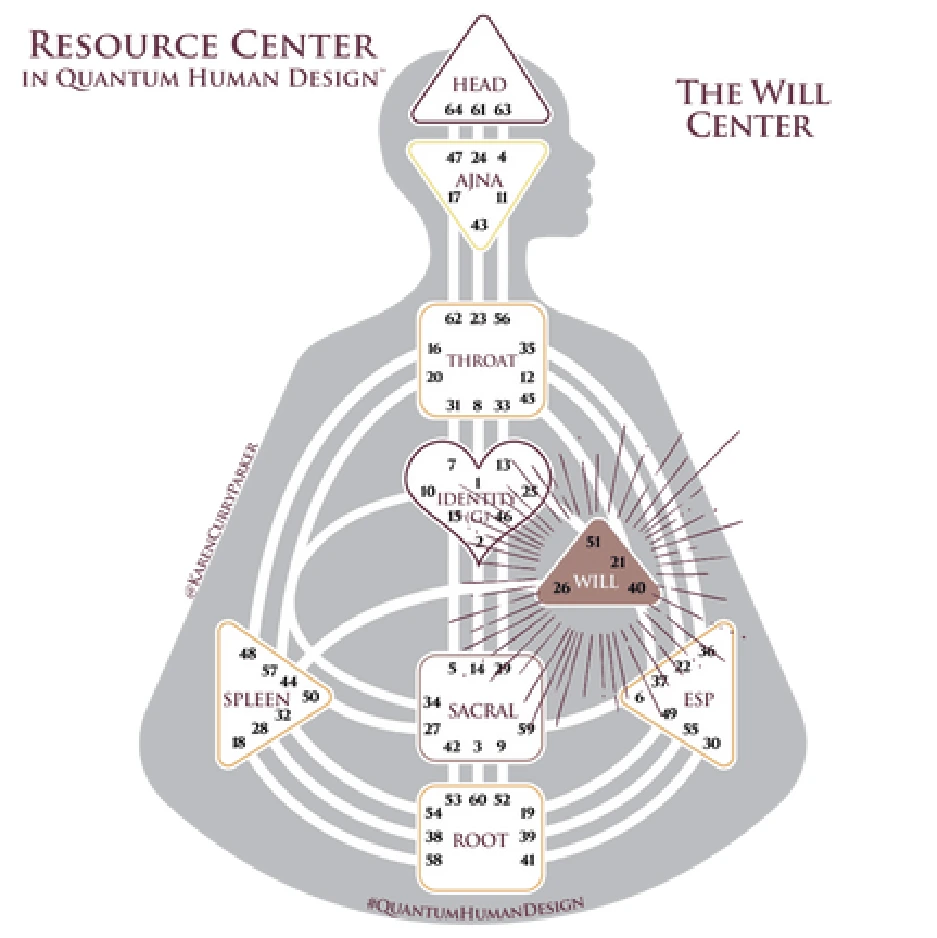
In Human Design, the Ego, or Will Center, is one of the nine energy Centers in the Bodygraph. It is one of the 2 Centers that make up the Heart Center (the other being the G Center). The Ego Center is associated with willpower, material needs, and self-worth. When defined, it provides a consistent source of willpower and a fixed sense of identity. When undefined, it can lead to questions about one’s value and inconsistent willpower.
Example: Someone with a defined Ego Center might have a consistent drive to prove their worth through material success.
See also: Heart Center, Centers
Embodiment
In Human Design, Embodiment refers to the process of fully living and expressing one’s unique design. It involves not just understanding one’s Human Design intellectually, but actively experiencing and manifesting it in daily life. Embodiment is about aligning one’s actions, decisions, and way of being with one’s Type, Strategy, and Authority.
Example: A Manifestor embodying their design would not only understand their Strategy to inform but would consistently practice informing others before taking significant actions.
See also: Type, Strategy, Authority
Emotional
In Human Design, Emotional refers to one of the four Authorities and is associated with the Solar Plexus Center. Those with Emotional Authority experience life through an emotional wave. For these individuals, making decisions when they are emotionally clear and calm, typically at the end of their emotional wave, is crucial for alignment.
Example: Someone with Emotional Authority might benefit from waiting out their emotional wave before making an important decision, rather than acting on immediate feelings.
See also: Authority, Solar Plexus Center
Emotional Wave
The Emotional Wave in Human Design refers to the cyclical nature of emotions experienced by those with a defined Solar Plexus Center. This wave moves from positive to negative states and back again, influencing mood, clarity, and decision-making. Understanding and working with one’s Emotional Wave is crucial for those with Emotional Authority.
Example: An individual might experience heightened excitement about a project, followed by doubt, before reaching a state of emotional clarity.
See also: Emotional, Solar Plexus Center, Authority
Empowerment
Empowerment in Human Design refers to the process of understanding and aligning with one’s unique energetic blueprint to make decisions and live authentically. It involves recognizing one’s innate strengths, embracing one’s design, and using this self-knowledge to navigate life in a way that feels natural and fulfilling. Empowerment in Human Design emphasizes living according to one’s own inner authority rather than external conditioning or expectations.
Example: A Generator type embracing their Sacral response as their decision-making tool, rather than trying to think things through logically, is experiencing empowerment in Human Design.
Energy Center (Center)
An energy center in Human Design is a focal point of specific energies within the bodygraph, representing different aspects of human consciousness and function. There are nine energy centers in total, each corresponding to particular traits, roles, and ways of processing energy. These centers can be defined (consistently energized) or undefined (open to external influences), shaping how an individual interacts with the world and experiences life.
Example: The Root Center, located at the base of the bodygraph, deals with pressure and adrenaline, influencing how a person handles stress and initiates action.
Energy Type
In Human Design, Energy Types refer to the Manifestor, Generator, and Manifesting Generator Types, who have consistent access to their own energy through a defined Sacral Center (for Generators and Manifesting Generators) or a motor connected to the Throat (for Manifestors and Manifesting Generators). These Types are designed for sustained action and work, as opposed to Non-Energy Types (Projectors and Reflectors).
Example: A Generator, as an Energy Type, has sustainable energy for work and activities when they’re responding to what lights them up.
See also: Type, Generator, Manifestor, Sacral Center
Ephemeris
In Human Design, the Ephemeris is an astronomical table used to calculate the positions of celestial bodies at the time of birth and conception. This data is crucial for creating an accurate Bodygraph. The Human Design system uses a unique synthesis of Western and Eastern astrological systems, incorporating data from both the tropical and sidereal zodiacs.
Example: The Ephemeris would be used to determine the exact position of Mars at the time of someone’s birth, which might activate specific Gates in their chart.
See also: Bodygraph, Gates
Experimentation
In Human Design, Experimentation refers to the process of living one’s design and observing the results. It’s encouraged as a way to validate and deepen one’s understanding of their unique Human Design. This involves consciously following one’s Strategy and Authority and noticing how life unfolds as a result.
Example: A Projector might experiment with waiting for invitations in various areas of life and observe how this impacts their energy levels and success.
See also: Strategy, Authority
Flow
Flow in Human Design refers to the natural and effortless state of being that occurs when an individual is living in alignment with their unique energetic blueprint. It is the experience of operating according to one’s innate design, making decisions based on one’s inner authority, and allowing energy to move through defined channels without resistance. Flow represents a harmonious way of navigating life, where actions and experiences feel authentic and in sync with one’s true nature.
Example: A Projector type experiencing flow might find themselves naturally recognizing others’ potential and offering guidance only when invited, leading to satisfying and impactful interactions.
Frustration
In Human Design, frustration is associated with the not-self theme of the Generator and Manifesting Generator Types. It arises when these Types don’t honor their Strategy of waiting to respond before taking action. Frustration signals that a Generator or Manifesting Generator may be out of alignment with their authentic nature, often feeling unfulfilled or stuck.
Example: A Generator who consistently initiates projects without waiting for something to respond to might experience a persistent sense of frustration or feeling like they’re working hard but getting nowhere.
See also: Generator, Manifesting Generator, Not-Self Theme, Strategy
G Center/Identity Center
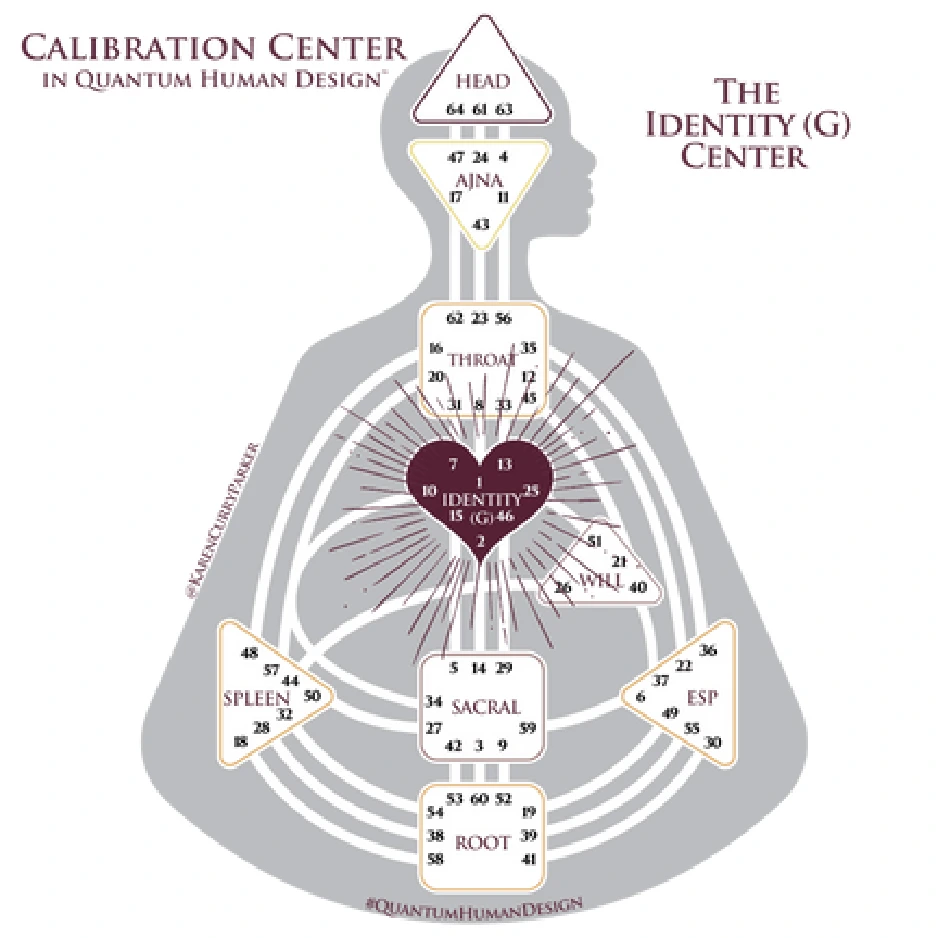
The G Center, also known as the Identity Center, is one of the nine energy Centers in Human Design. Located in the middle of the Bodygraph, it’s associated with direction, love, and identity. When defined, it provides a consistent sense of identity and direction in life. When undefined, it can lead to questions about one’s purpose and identity, but also offers flexibility in these areas.
Example: Someone with a defined G Center might have a strong sense of who they are and where they’re going in life, while someone with an undefined G Center might be more adaptable in their identity and direction.
See also: Centers, Identity
Gates
In Human Design, Gates are specific points of energy within the Bodygraph, corresponding to the 64 hexagrams of the I Ching. There are 64 Gates in total, each representing a particular theme. When a Gate is defined in a chart, it indicates that the individual has consistent access to that particular energy or trait.
Example: Gate 1, the Gate of “Self Expression”, when defined, might indicate a person with a drive for self-expression and the potential to initiate new beginnings.
See also: Channels, Hexagrams, I Ching
Gene Keys (Gates)
Gene Keys in Human Design are a system that expands upon and complements the Human Design framework, offering a more contemplative approach to self-discovery. They represent 64 universal archetypes, each corresponding to a specific Human Design gate, and describe a spectrum of consciousness from “shadow” to “gift” to “siddhi” (highest expression). Gene Keys provides a deeper, more nuanced exploration of personal growth and transformation based on an individual’s unique genetic code.
Example: Gene Key 4, associated with the Human Design gate of “Formulization,” explores the shadow of Intolerance, the gift of Understanding, and the siddhi of Forgiveness, offering insights into how a person might evolve their approach to mental patterns and relationships.
Generator (Alchemist)
Generator is one of the five Types in Human Design, characterized by having a defined Sacral Center. Generators are designed to respond to life rather than initiate. They have a sustainable life force energy and the capacity for consistent work. Their Strategy is to wait to respond, and their signature is satisfaction when living in alignment.
Example: A Generator might thrive in a job where they can respond to tasks as they come up, rather than having to initiate projects themselves.
See also: Type, Sacral Center, Strategy
Hanging Gate
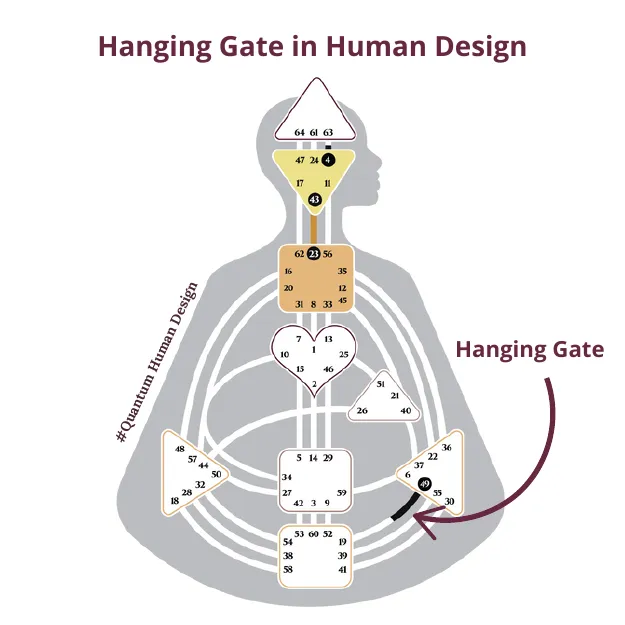
A Hanging Gate in Human Design refers to a defined Gate that doesn’t form a complete Channel because the corresponding Gate on the other end is not defined. Hanging Gates represent potential energies or traits that may not have a consistent outlet or expression. They can create pressure or themes in a person’s life related to the Gate’s energy.
Example: If someone has Gate 11 defined but not Gate 56, they might feel pressure to share ideas but struggle to find the right way to express them consistently.
See also: Gates, Channels
Harmonic Gate
A harmonic gate in Human Design refers to a gate that shares a complementary energy or theme with another gate, often forming a channel when both are defined. These gates resonate with each other, creating a harmonious flow of energy when expressed together. Harmonic gates can enhance certain traits or potentials within an individual’s design, offering a more nuanced understanding of how different aspects of one’s chart interact and influence each other.
Example: Gates 10 (Love of Self) and 57 (Intuition) are harmonic gates that, when both defined, form the Channel of Perfected Form, potentially enhancing one’s intuitive awareness and ability to navigate life’s challenges with grace.
Harmony
Harmony in Human Design refers to the state of balance and alignment that occurs when an individual is living in accordance with their unique energetic blueprint. It represents the smooth integration of various aspects of one’s design, including defined centers, channels, and gates, working together cohesively. Harmony is achieved when one honors their inner authority, respects their energy type’s strategy, and allows their natural gifts and tendencies to express themselves without resistance or forced effort.
Example: A Manifesting Generator experiencing harmony might find themselves effortlessly moving from one fulfilling project to another, responding to life’s opportunities with enthusiasm and efficiency, while also honoring their need for breaks and rest.
Head Center
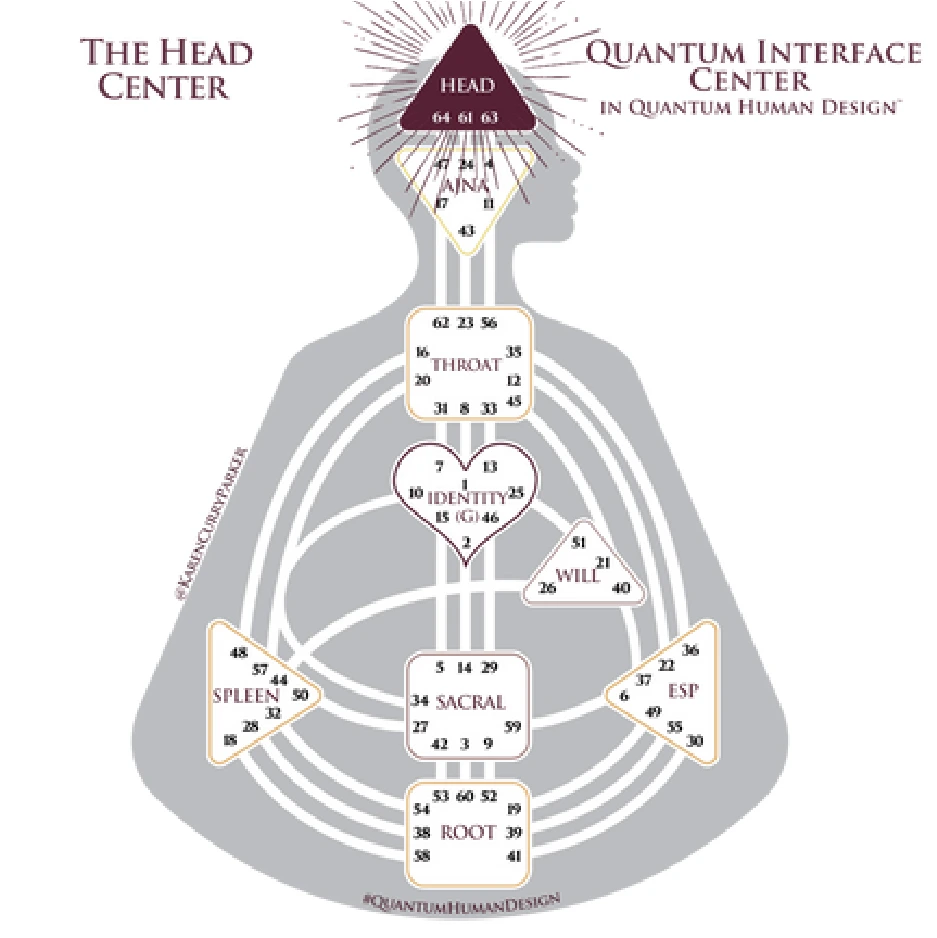
The Head Center ( Quantum Interface Center in Quantum Human Design) is one of the nine energy Centers in Human Design, located at the top of the Bodygraph. It’s associated with mental pressure and inspiration. When defined, it can provide a consistent source of questions and ideas. When undefined, it can be open to various forms of inspiration but may also feel mental pressure from others.
Example: Someone with a defined Head Center is a conduit for inspiration to share with others at the right time.
See also: Centers, Mental Pressure
Health Centers
Health Centers in Human Design refer to specific energy centers within the bodygraph that are particularly relevant to an individual’s physical and emotional well-being. While all centers contribute to overall health, certain centers are more directly linked to various aspects of health and vitality. These health-focused centers provide insights into how a person processes energy, manages stress, and maintains balance in their body and mind.
Example: The Spleen Center is considered a key health center in Human Design, as it relates to the immune system, intuition about well-being, and the body’s moment-to-moment survival instincts.
Heart/Ego Center
The Heart/Ego Center in Human Design is an energy center associated with willpower, self-worth, and material desires. It is one of the four motor centers in the Human Design system, providing a source of energy for action and manifestation. The Heart/Ego Center is connected to themes of courage, pride, and the ability to make and keep promises, influencing how an individual interacts with the material world and asserts their will.
Example: A person with a defined Heart/Ego Center might consistently demonstrate strong willpower in pursuing their goals, feel a deep sense of pride in their accomplishments, and be reliable in keeping their commitments to others.
Hexagram
In Human Design, Hexagrams are derived from the I Ching and correspond to the 64 Gates in the Bodygraph. Each Hexagram/Gate represents a specific archetype or theme of human experience. The activation of these Hexagrams in one’s chart contributes to their unique energetic makeup and life themes.
Example: Hexagram 1, “The Creative,” corresponds to Gate 1 in Human Design and represents the theme of self-expression and new beginnings.
See also: Gates, I Ching
Human Design
Human Design is a system that combines elements of astrology, the I Ching, Kabbalah, and the chakra system to create a comprehensive map of an individual’s energetic makeup. It provides insights into one’s unique way of operating in the world, including decision-making strategies, life purpose, and potential challenges. The system uses a person’s birth data to generate a Bodygraph, which visually represents their energetic design.
Example: Through a Human Design reading, someone might discover they are a Projector Type with Emotional Authority, providing guidance on how to make decisions and navigate life most effectively.
See also: Bodygraph, Type, Authority, Strategy
Human Potential
In Human Design, human potential refers to the unique capacities and energies inherent in each individual’s genetic makeup and energetic configuration. It encompasses the idea that each person has a distinct set of traits, strengths, and challenges encoded in their Human Design chart, which can be leveraged for personal growth and fulfillment. Human potential in this context is about aligning with one’s innate nature and decision-making strategy to live authentically and maximize one’s gifts.
Example: A person with a Projector type in Human Design might discover their potential for guiding and advising others, realizing that when they wait for an invitation and recognition before offering their insights, they can have a profound impact on their environment and relationships.
To research other terms:
Has This Human Design Glossary Inspired You to Explore Your Human Design More Deeply?
To find out what your Human Design is, why not download your FREE Human Design chart
Remember that we all have ALL of the chart. If the Gate is colored in or defined, it’s part of your Soul Curriculum. If it’s white or undefined, it means you learn about this Gate through relationships with others or through the Transits.
At its core, Human Design is a unique system that offers profound insights into your inner self and how you interact with the world around you. Your Human Design chart is a valuable tool that can help you understand your true nature, discover your strengths and weaknesses, and unlock your full potential.
By downloading and reviewing your unique Human Design Chart you are embarking on a journey of self-discovery that will empower you to make conscious choices in all aspects of your life. Your chart is an Energy Blueprint of your unique energy configuration and contains valuable information about your personality traits, your natural talents, and your life purpose. With this knowledge, you’ll navigate life’s challenges with greater ease and clarity.
Human Design is a deeply empowering system that encourages us to embrace our true selves, rewrite our personal narrative, and live in alignment with our inner wisdom. When we align with our authentic nature, we tap into a wellspring of creativity, joy, and fulfillment that flows effortlessly through us.
There’s More – How To Learn More About Human Design
If you are trying to learn and apply Human Design to your life circumstances, but traditional Human Design rings a little off-key, you don’t quite connect with it, or it feels heavy as you read it. We invite you to explore training options with Quantum Human Design, internationally respected and time-tested training courses.
These courses will empower you to create a life filled with more money, better relationships, health and vitality, a rewarding career, and experience profound personal transformation.
Explore the life-changing options in our Quantum Human Design School
Curious about the difference between Human Design and Quantum Human Design? Karen Curry Parker explains it in this video: