The Human Design System is simple to understand overall, but it is much more powerful when you understand the precise definitions of terms associated with it. We decided to help you with that by creating this Human Design Glossary of Terms.
No Definition
In Human Design, No Definition refers to a Bodygraph where there are no defined Channels connecting any Centers. This means all Centers are open (white) in the chart. Individuals with No Definition are considered Reflectors, one of the five Types in Human Design. They have a unique capacity to reflect and amplify the energies around them.
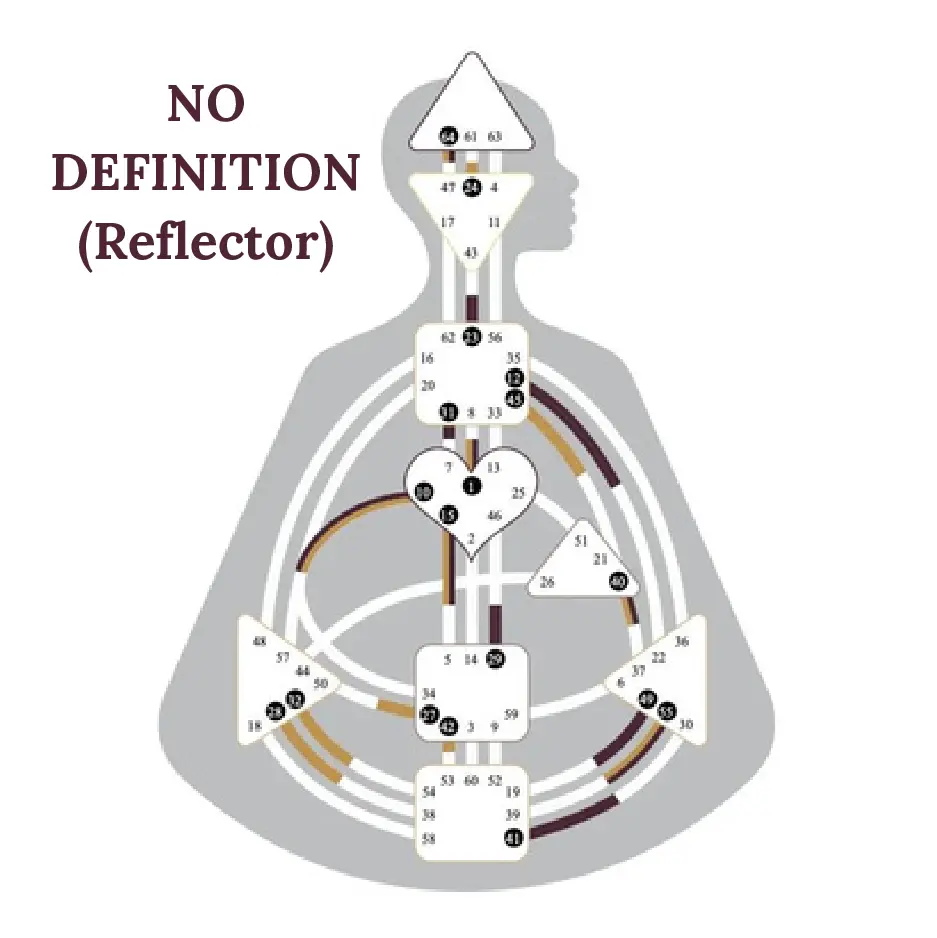
Example: A person with No Definition would be a Reflector Type, potentially experiencing life as a “mirror” for others and their environments.
See also: Definition, Reflector, Centers
Non-Energy Type
In Human Design, Non-Energy Types refer to the Manifestor, Projector, and Reflector Types, who do not have consistent access to their own Sacral energy. Unlike Generators and Manifesting Generators (Energy Types), Non-Energy Types are not designed for long periods of sustained work. Instead, they have unique gifts in guiding, reflecting, and managing energy.
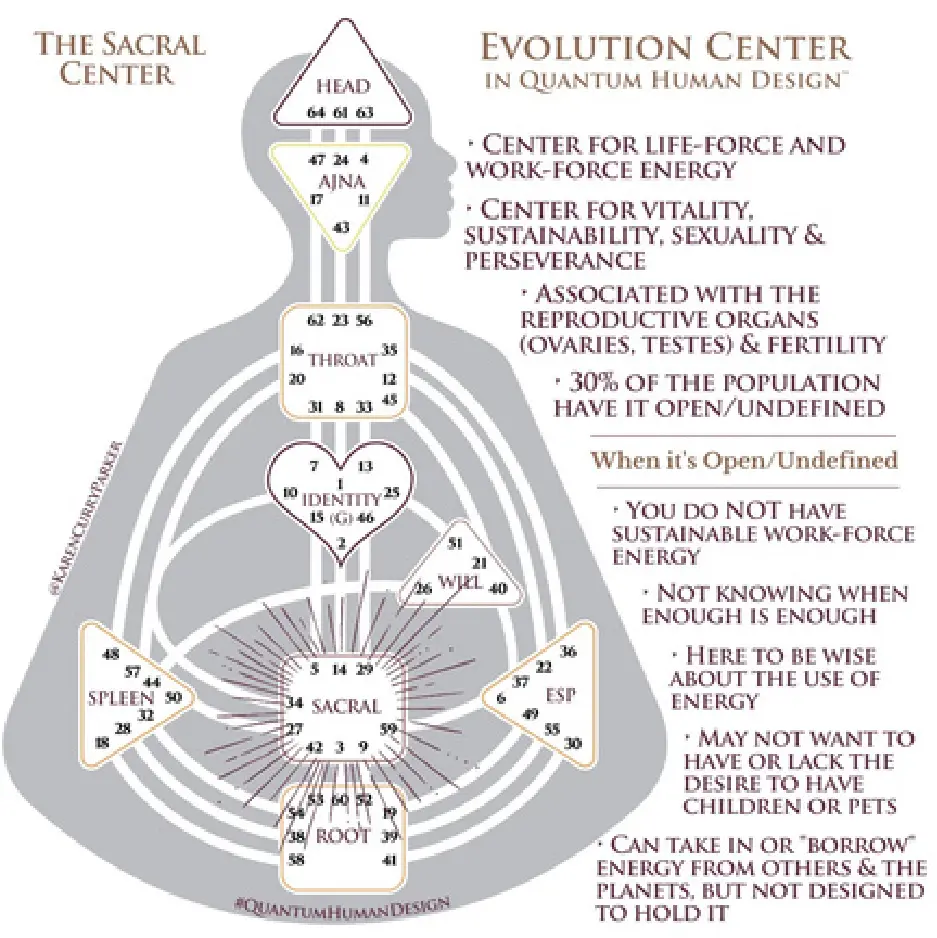
Example: A Projector, as a Non-Energy Type, might excel at guiding and directing the energy of others rather than engaging in long periods of physical work.
See also: Type, Projector, Reflector
Not-Self
The Not-Self in Human Design refers to conditioned behaviors and decision-making processes that are not aligned with one’s true nature as defined by their Type and Authority. Each Type has a specific Not-Self theme that emerges when they’re not living according to their Strategy and Authority.
Example: For a Generator, the Not-Self theme is frustration, which may arise when they initiate actions without waiting to respond.
See also: Type, Strategy, Authority
Open
In Human Design, Open refers to undefined (white) Centers in the Bodygraph. Open Centers do not have consistent access to that particular energy and are more susceptible to conditioning from the environment and others. They also offer the potential for wisdom and flexibility in those areas of life.
Example: Someone with an Open Will Center might be more flexible in their approach to willpower and material needs, but may also struggle with consistent self-worth.
See also: Centers, Definition
Outer Authority
In Human Design, Outer Authority refers to the external sources of influence and guidance that a person may rely on for decision-making and direction in life. It represents the conditioned aspects of one’s personality that are shaped by societal expectations, family traditions, and cultural norms. Outer Authority is contrasted with Inner Authority, which is considered one’s authentic decision-making process based on their unique Human Design.
Example: John, who has a Splenic Authority in his Human Design chart, realizes he has been making career decisions based on his parents’ expectations (Outer Authority) rather than trusting his own intuitive splenic responses (Inner Authority). By recognizing this, John begins to shift towards making choices that align more closely with his innate decision-making process, leading to greater satisfaction and authenticity in his work life.
Peace
In Human Design, Peace is the signature emotion of the Manifestor Type when they are living in alignment with their Strategy and Authority. It represents a state of calm and lack of resistance that Manifestors experience when they inform others before taking action.
Example: A Manifestor who consistently informs their team before initiating new projects might experience a sense of peace and ease in their work environment.
See also: Manifestor, Strategy, Signature
Personal Authority (Inner Authority)
In Human Design, Personal Authority refers to an individual’s unique and innate decision-making process based on their specific energy type and inner wisdom. It represents the most authentic way for a person to make choices and navigate life according to their Human Design chart. Personal Authority is considered essential for living in alignment with one’s true nature and experiencing fulfillment.
Example: Maria discovers through her Human Design reading that she has Emotional Authority. This means her most authentic decision-making process involves waiting for emotional clarity before making important choices, rather than deciding in the moment. By honoring this Personal Authority, Maria finds she makes decisions that feel more aligned and lead to better outcomes in her personal and professional life.
Personality (Personality Side)
In Human Design, Personality refers to the conscious aspects of one’s design, determined by the position of the planets at the time of birth. It represents the part of ourselves that we’re aware of and identify with consciously. It’s also known as your Soul Purpose. The Personality is represented by the black/Burgundy markings on the Bodygraph. (Depending on what software you use)
Example: Someone’s Personality might include a consciously defined Throat Center, making them aware of their capacity for self-expression.
See also: Design, Personality Crystal
Personality Crystal
The Personality Crystal in Human Design represents the Soul aspects of an individual’s energy configuration. It is calculated based on the position of the planets at the exact time of birth. The Personality Crystal resides in the Head Center and expresses the Soul Purpose at the moment of birth.
Example: The Personality Crystal or Soul Purpose gives us the opportunity to mature and allow the Soul story to be integrated into the Human Story.
Here’s how Karen Curry Parker explains how the Design Crystal and Personality Crystal work together:
See also: Design Crystal, Personality
Planet
In Human Design, Planets refer to the celestial bodies used in calculating an individual’s chart. The system uses both the planets from traditional astrology (Sun, Moon, Mercury, Venus, Mars, Jupiter, Saturn, Uranus, Neptune, Pluto) and additional points (Nodes, Earth). The positions of these planets at birth and 88 degrees before birth determine the activation of Gates and Channels in the Bodygraph.
Example: The position of Mars in someone’s chart might activate Gate 9, influencing their approach to focus and determination.
See also: Gates, Channels, Bodygraph
Polarity
In Human Design, Polarity refers to the dynamic interplay between opposite or complementary energies within a person’s chart. It represents the inherent duality present in various aspects of Human Design, such as defined and undefined centers, or conscious and unconscious activations. Polarity is considered an essential concept for understanding the complexities and potential tensions within an individual’s energetic makeup. These complexities are also known as conundrums within the chart that we have to learn to balance within our lives.
Example: Tom’s Human Design chart shows a defined Will/Heart center (Ego) paired with an undefined Solar Plexus center. This polarity indicates that while Tom has consistent access to willpower and material motivation (defined Will/Heart), he may be more susceptible to emotional influences from others (undefined Solar Plexus), creating a dynamic interplay between his drive for material success and his emotional experiences in relationships and decision-making.
Primary Health System (PHS)
The Primary Health System (PHS) in Human Design is a framework that focuses on an individual’s unique nutritional and environmental needs based on their genetic design. It suggests that each person has specific dietary requirements and environmental factors that can significantly impact their overall health and well-being. The PHS is determined by analyzing certain aspects of an individual’s Human Design chart, particularly the digestion and environment variables.
Example: Lisa learns through her Human Design PHS analysis that she has a “Right Angle Cross of Contagion” as her primary health theme. This indicates that she may benefit from a varied diet, regular fasting periods, and environments with fresh air and natural light. By aligning her lifestyle with these PHS recommendations, Lisa experiences improved energy levels and overall health.
Profile
In Human Design, the Profile is a two-number combination derived from the conscious (personality) and unconscious (design) Sun and Earth positions. It describes a person’s life purpose and the way they approach their role in life. There are 12 possible Profiles, each offering insights into an individual’s natural tendencies and life lessons.
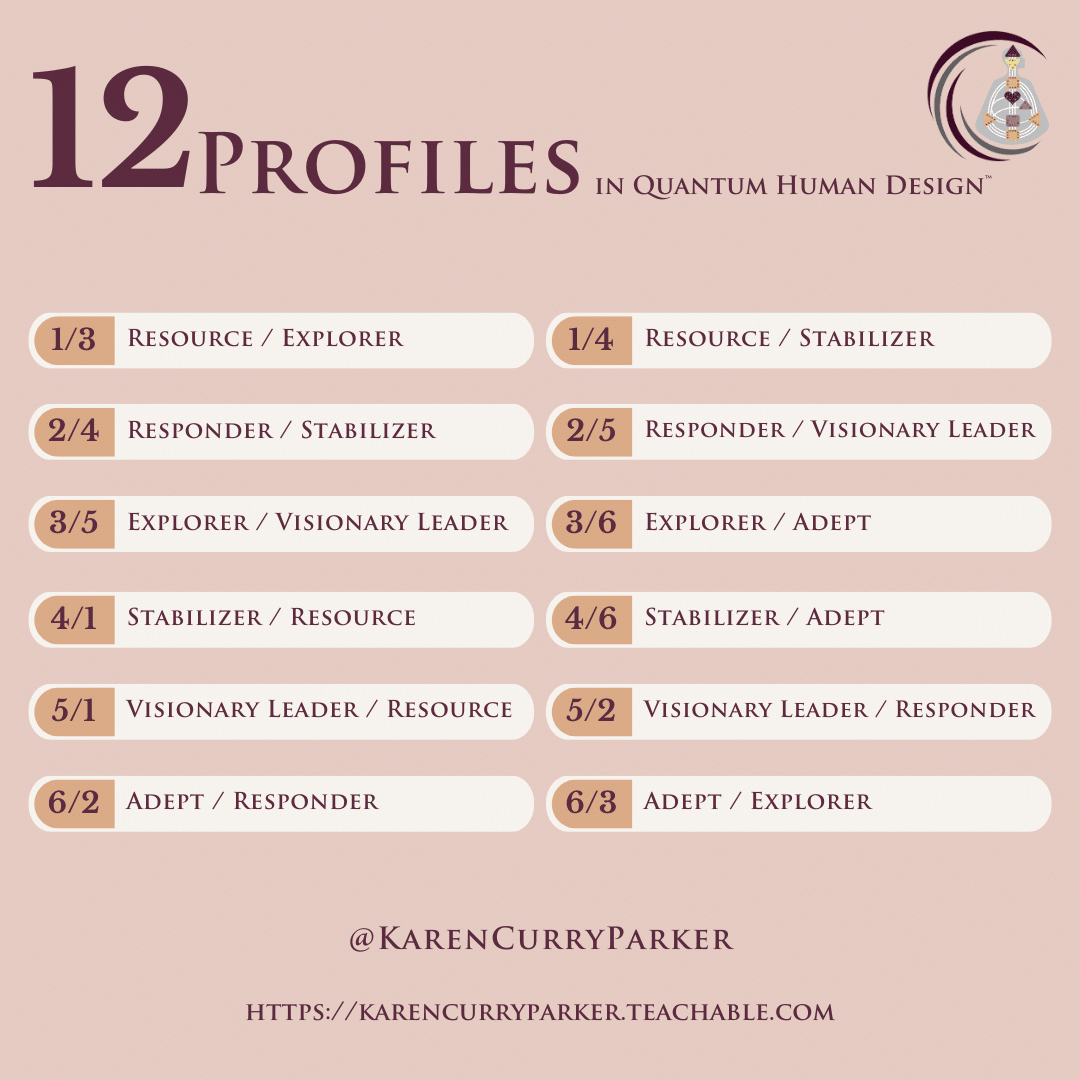
Example: A 1/3 Profile indicates someone with a natural investigative approach (Line 1) combined with a trial-and-error, experiential learning style (Line 3).
See also: Line, Personality, Design
Profile Lines
Profile Lines in Human Design refer to the two numbers that make up an individual’s Profile. These numbers correspond to specific Lines (1-6) from the hexagrams defined by the conscious and unconscious Sun and Earth. Each Line carries unique characteristics and themes that influence how a person approaches life and fulfills their purpose.
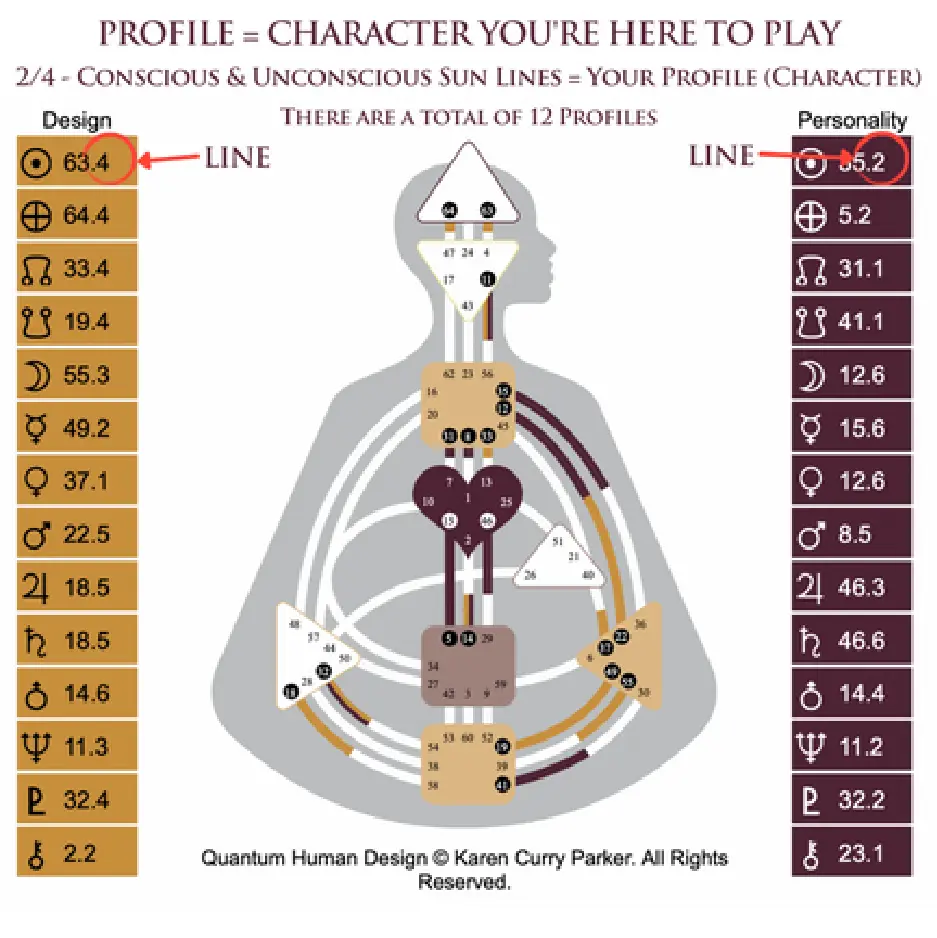
Example: In a 4/6 Profile, Line 4 represents networking and opportunism, while Line 6 represents the role model or hermit.
See also: Profile, Line
Profile Theme
In Human Design, the Profile Theme represents a person’s unique role or perspective in life, determined by two numbers derived from their chart. It describes how an individual interacts with the world and others, influencing their life purpose and personal journey. The Profile Theme is composed of two lines, each ranging from 1 to 6, resulting in 12 possible combinations that offer insights into a person’s behavior patterns and life experiences.
Example: Sarah discovers her Human Design Profile is 6/2, known as the “Role Model/Hermit” This Profile Theme suggests that Sarah has a natural ability to influence others through her actions (6th line) and will likely experience three distinct phases in her life, culminating in a period of wisdom and potential leadership (2nd line). Understanding this Profile Theme helps Sarah navigate her personal and professional relationships more effectively.
Projector (Orchestrator)
Projector is one of the five Types in Human Design, characterized by not having a defined Sacral Center. Projectors are designed to guide and direct energy rather than generate it. Their Strategy is to wait for recognition and invitation before offering their insights or entering major life situations. Their signature is success when living in alignment.
Example: A Projector might excel in a role where they can guide a team’s energy and strategy, rather than doing the hands-on work themselves.
See also: Type, Strategy, Invitation
Purpose
In Human Design, Purpose refers to the unique role or contribution an individual is designed to fulfill in life. It’s often related to one’s Type, Profile, and Incarnation Cross. Understanding one’s Purpose can provide direction and meaning in life decisions and actions.
Example: A 4/6 Profile Projector might have a purpose related to networking and being a role model in their field of expertise.
See also: Type, Profile, Incarnation Cross
Quadruple Split
In Human Design, a Quadruple Split refers to a rare configuration in a person’s BodyGraph where the defined centers are separated into four distinct groups, with no channels connecting them. This split creates four separate areas of consistent energy, each isolated from the others. A Quadruple Split is considered one of the most complex and potentially challenging energy configurations in Human Design.
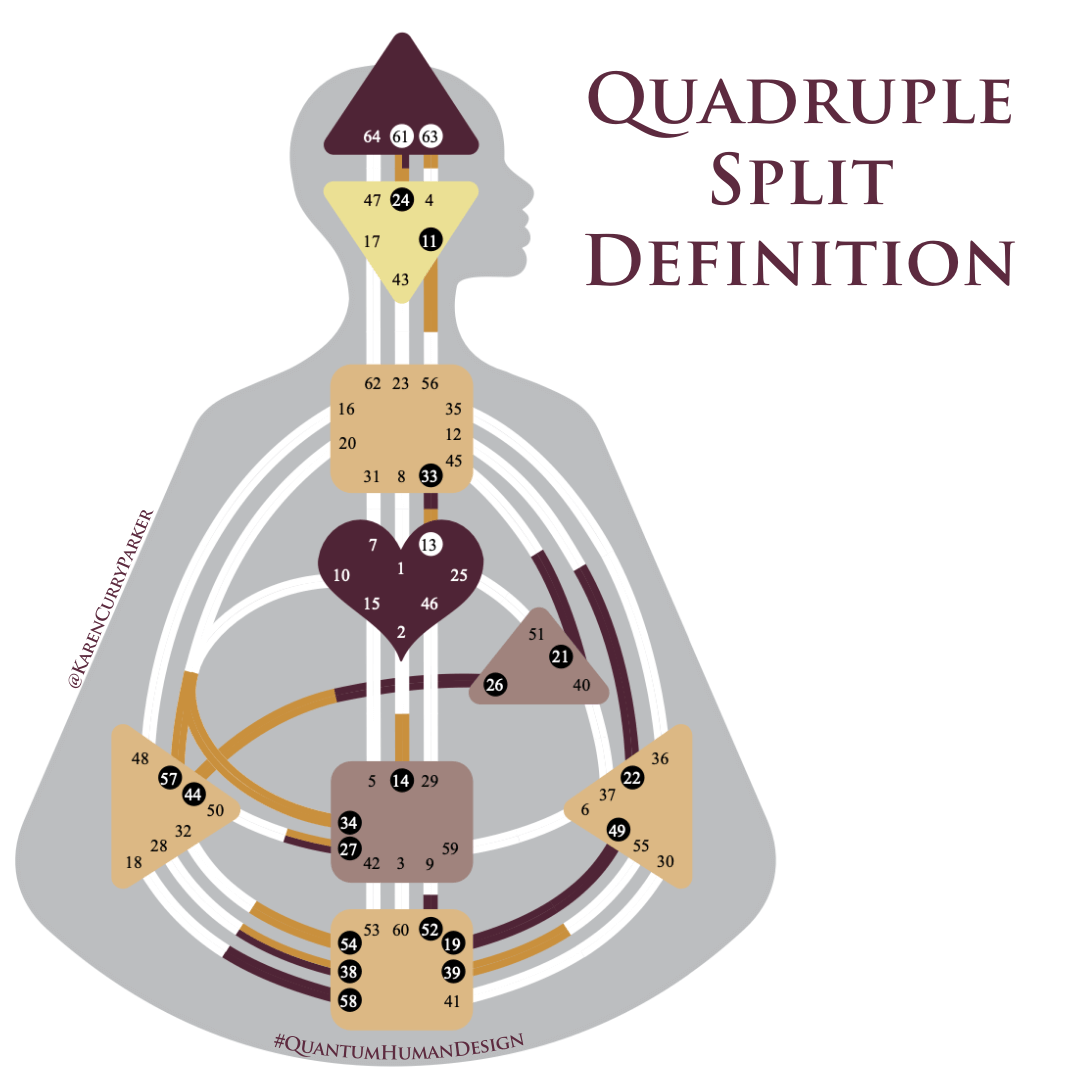
Example: James discovers he has a Quadruple Split in his Human Design chart, with defined centers clustered in four separate areas: Head/Ajna, Throat, Heart/G, and Root. This configuration suggests that James may experience internal “conversations” between these different aspects of his being, potentially leading to indecision or internal conflict. By understanding this unique energy layout, James can work on integrating these separate aspects of himself and develop strategies to navigate decision-making more effectively.
Quantum Human Design
Quantum Human Design is an expanded interpretation of traditional Human Design that incorporates principles from quantum physics and advanced metaphysical concepts. It delves deeper into the energetic and spiritual aspects of Human Design, offering a more nuanced understanding of human consciousness and potential. Quantum Human Design aims to provide a more comprehensive framework for personal growth and self-realization by exploring the multidimensional nature of human existence.
Example: Michael explores Quantum Human Design and learns that his Incarnation Cross has quantum layers beyond its traditional interpretation. This expanded view helps him understand how his energy interacts with the quantum field, providing insights into his life purpose and potential across multiple dimensions of reality. By applying these quantum principles, Michael gains a deeper understanding of his decision-making process and how to align with his highest potential.
Quarters
In Human Design, Quarters refer to the four distinct sections of the Rave Mandala, which is a circular representation of the 64 Gates. Each Quarter represents a different stage in the cycle of life and consciousness, with its own themes and energies. The four Quarters are the Quarter of Initiation (Gates 1-16), the Quarter of Civilization (Gates 17-32), the Quarter of Duality (Gates 33-48), and the Quarter of Mutation (Gates 49-64).
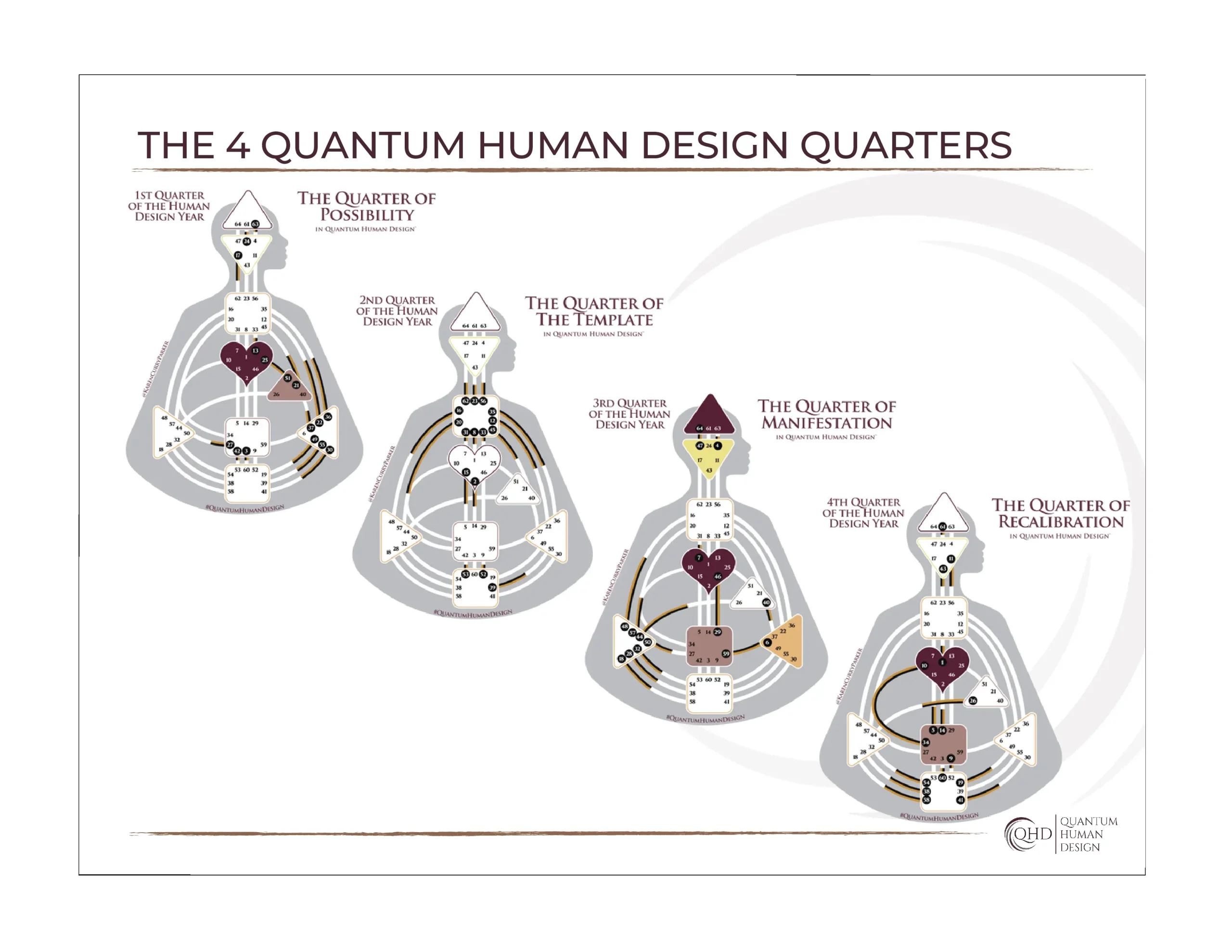
Example: A person with many defined Gates in the Quarter of Civilization (Gates 17-32) might have a strong focus on social structures, community building, and the organization of resources, potentially excelling in roles that involve management, logistics, or societal improvement.
Ra Uru Hu
Ra Uru Hu is the founder of the Human Design System. In 1987, he reportedly had a mystical experience during which he received the information that became the foundation of Human Design. Ra Uru Hu dedicated his life to developing and teaching this system until his passing in 2011.
Example: Ra Uru Hu’s teachings form the core of Human Design education and are still studied by practitioners worldwide.
See also: Human Design
Reflector (Calibrator)
Reflector is one of the five Types in Human Design, characterized by having no defined Centers in their chart. Reflectors are designed to reflect and amplify the energies around them. Their Strategy is to wait a full lunar cycle (28 days) before making major decisions. Their signature is surprise when living in alignment.
Example: A Reflector might serve as a barometer for the health of a community or organization, sensing and reflecting the overall energy.
See also: Type, Strategy, No Definition
Resistance
In Human Design, Resistance refers to the energy or tension that arises when an individual goes against their natural design or ignores their inner authority. It’s seen as a form of internal friction that occurs when one makes decisions or takes actions that are not in alignment with their authentic self. Resistance is often experienced as discomfort, stress, or a sense of things not flowing smoothly in life.
Example: Sarah, who has a Generator type with Sacral Authority, consistently makes snap decisions without consulting her Sacral response. She experiences resistance in the form of fatigue, frustration, and a feeling of being stuck in unfulfilling situations. Upon learning about her design and starting to wait for her Sacral response before making decisions, Sarah notices a significant reduction in resistance and an increase in life satisfaction and energy.
Resonance
In Human Design, resonance refers to the natural alignment and harmony between an individual’s authentic self and their actions or experiences. It occurs when a person is living in accordance with their unique energetic blueprint, as defined by their Human Design chart. Resonance is often experienced as a sense of flow, ease, and correctness in one’s decisions and interactions with the world.
Example: Sarah, who has a Manifesting Generator design, feels a deep resonance when she follows her sacral response and says “yes” to a spontaneous opportunity to join a dance class. She experiences a surge of energy, excitement, and a feeling of being in the right place at the right time.
Response
In Human Design, Response primarily refers to the inner knowing one experiences when trusting their Authority. The energy centers each produce a response, or feeling, to indicate a decision.
Example: A Generator with Sacral Authority will sense their Sacral Response as a yes, or no, to an invitation.
Right Angle Cross
In Human Design, a Right Angle Cross is one of the three variations of Incarnation Crosses. It represents a life theme that is focused on personal evolution and individual purpose. Individuals with a Right Angle Cross in their chart often have a strong sense of personal destiny and may feel driven to fulfill a specific role or purpose in life.
Example: Someone with a Right Angle Cross of Planning might feel a strong personal drive to create structure and organization in their life and work.
See also: Incarnation Cross, Left Angle Cross
Root Center
The Root Center is one of the nine energy Centers in Human Design, located at the base of the Bodygraph. It’s associated with adrenaline, stress, and pressure to find security. When defined, it provides a consistent source of adrenaline and pressure to “push” through things. When undefined, it can be more sensitive to external pressures but also more flexible in responding to them.
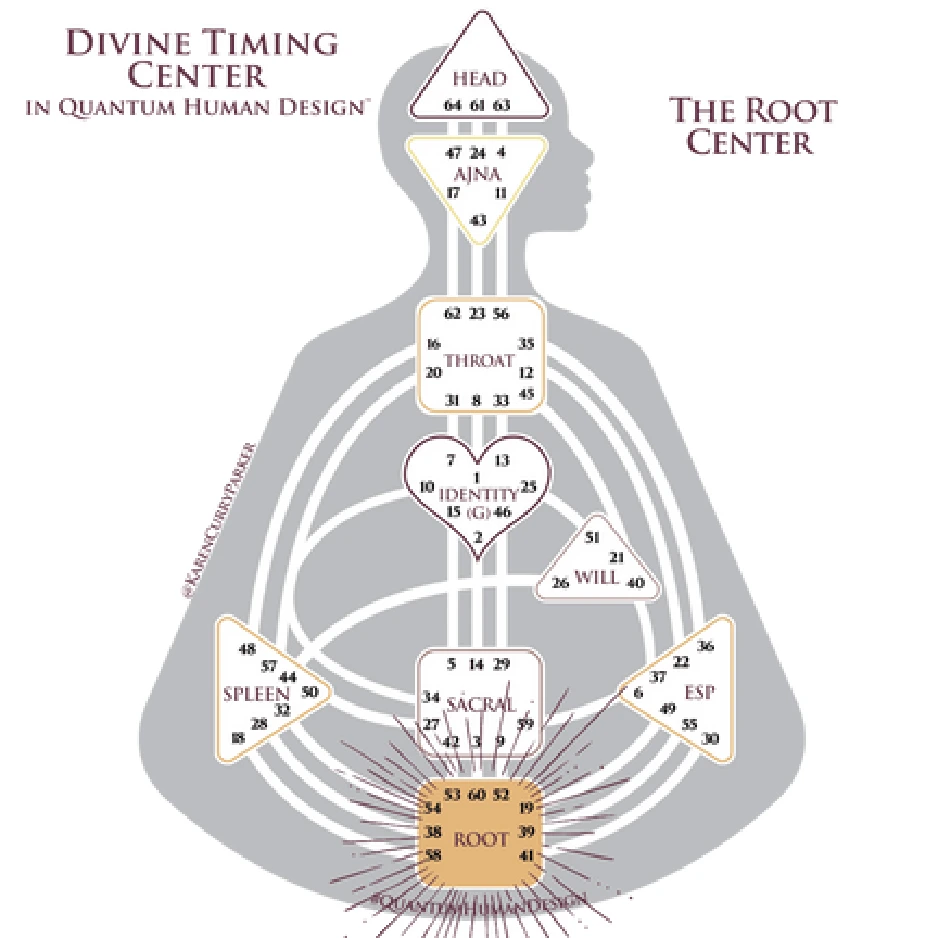
Example: Someone with an open Root Center might have a consistent drive to complete tasks and projects, often feeling internal pressure to get things done.
See also: Centers, Pressure
To research other terms:
Has the Human Design Glossary Inspired You to Explore Your Human Design More Deeply?
To find out what your Human Design is, why not download your FREE Human Design chart
Remember that we all have ALL of the chart. If the Gate is colored in or defined, it’s part of your Soul Curriculum. If it’s white or undefined, it means you learn about this Gate through relationships with others or through the Transits.
At its core, Human Design is a unique system that offers profound insights into your inner self and how you interact with the world around you. Your Human Design chart is a valuable tool that can help you understand your true nature, discover your strengths and weaknesses, and unlock your full potential.
By downloading and reviewing your unique Human Design Chart you are embarking on a journey of self-discovery that will empower you to make conscious choices in all aspects of your life. Your chart is an Energy Blueprint of your unique energy configuration and contains valuable information about your personality traits, your natural talents, and your life purpose. With this knowledge, you’ll navigate life’s challenges with greater ease and clarity.
Human Design is a deeply empowering system that encourages us to embrace our true selves, rewrite our personal narrative, and live in alignment with our inner wisdom. When we align with our authentic nature, we tap into a wellspring of creativity, joy, and fulfillment that flows effortlessly through us.
There’s More – How To Learn More About Human Design
If you are trying to learn and apply Human Design to your life circumstances, but traditional Human Design rings a little off-key, you don’t quite connect with it, or it feels heavy as you read it. We invite you to explore training options with Quantum Human Design, internationally respected and time-tested training courses.
These courses will empower you to create a life filled with more money, better relationships, health and vitality, a rewarding career, and experience profound personal transformation.
Explore the life-changing options in our Quantum Human Design School
Curious about the difference between Human Design and Quantum Human Design? Karen Curry Parker explains it in this video: