The Human Design System is simple to understand overall, but it is much more powerful when you understand the precise definitions of terms associated with it. We decided to help you with that by creating this Human Design Glossary of Terms.
I Ching
The I Ching, or Book of Changes, is an ancient Chinese divination text that forms a foundational element of Human Design. In Human Design, the 64 hexagrams of the I Ching correspond to the 64 Gates in the Bodygraph. Each hexagram represents a specific archetype or life theme, which is integrated into the Human Design system to provide deeper insights into an individual’s energetic makeup.
Example: The I Ching hexagram 64, “Before Completion,” corresponds to Gate 64 in Human Design, representing the pressure to bring things to completion and find mental clarity.
See also: Hexagrams, Gates
Incarnation Cross
The Incarnation Cross in Human Design is derived from the positions of the Sun and Earth in a person’s chart at birth and design. It represents the overall life theme or purpose of an individual. There are 192 Incarnation Crosses, each offering a unique perspective on one’s life journey and potential contribution to the world.
Example: Someone with the Cross of Service might find their life revolving around themes of helping others and finding ways to be of use to their community.
See also: Design, Personality
Individual Circuitry
The Individual Circuit is one of the main Circuits in Human Design, representing aspects of human consciousness related to empowerment, uniqueness, and mutation. It includes Channels that connect the G Center to the Throat Center and is associated with bringing new ideas and innovations into the world. People with strong Individual Circuit definition often feel pressure to be unique or to transform themselves and others.
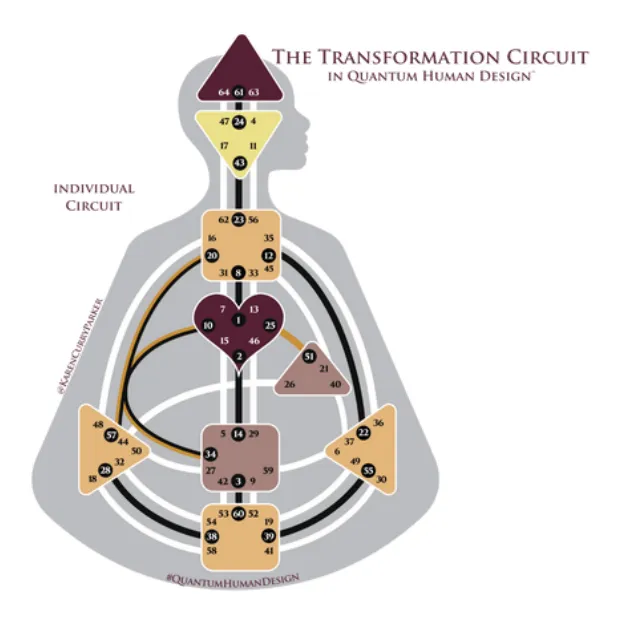
Example: Someone with the 51-21 The Channel of Initiation (part of the Individual Circuit) might feel a need you use their experiences to inspire others. The lower expression might manifest as serving the self at a cost to others.
See also: Circuits, Channels
Inform
In Human Design, “Inform” is primarily associated with the Strategy of the Manifestor Type. Manifestors are designed to initiate action but are advised to inform others before doing so. This process of informing helps to reduce resistance and create smoother interactions with others who may be impacted by the Manifestor’s actions.
Manifesting Generators also have as part of their strategy to inform as well as to respond.
Example: A Manifestor might inform their team about a new project idea before starting to implement it, helping to get others on board and reduce potential friction.
See also: Manifestor, Strategy
Inner Authority
Inner Authority in Human Design refers to an individual’s unique internal system for making correct decisions. It is determined by the defined Centers in one’s Bodygraph and is considered the most reliable way to navigate life in alignment with one’s true self. There are several types of Authority, including Emotional, Sacral, Splenic, Ego, and Self-Projected.
Example: Someone with Sacral Authority would make decisions based on their gut response of “uh-huh” (yes) or “uh-uh” (no) to opportunities or questions.
See also: Authority, Centers, Strategy
Integration
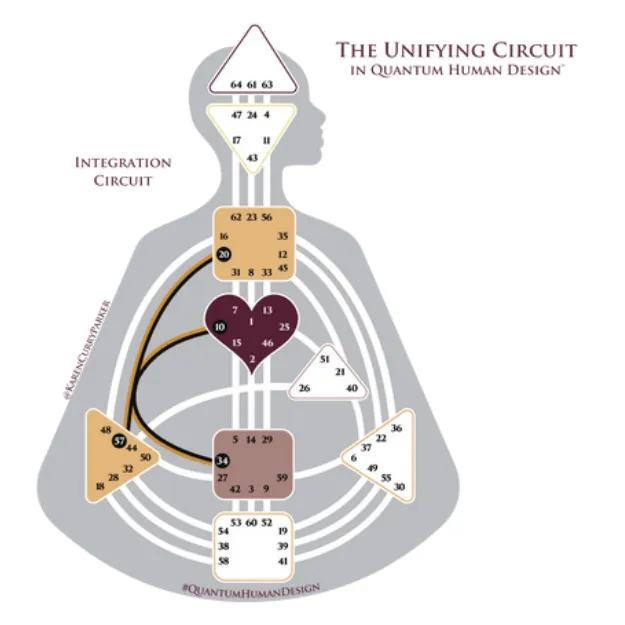
Integration in Human Design refers to the process of aligning one’s conscious actions and decisions with one’s innate energetic design. It involves understanding and embodying one’s unique Human Design chart, including type, strategy, and authority. Integration is the journey of living in harmony with one’s authentic self, leading to a more fulfilling and effortless life experience.
Example: A Generator type might achieve integration by learning to wait for things to respond to, rather than initiating, and by following their Sacral response in decision-making, resulting in increased energy, satisfaction, and a sense of being in flow with life.
Invitation
In Human Design, “Invitation” is primarily associated with the Strategy of the Projector Type. Projectors are designed to wait for invitation and recognition before offering their guidance or entering into major life situations. This Strategy helps Projectors conserve their energy and engage in situations where their unique gifts are truly appreciated.
Example: A Projector might wait for an invitation to join a project team rather than volunteering, ensuring their skills are recognized and valued from the start.
See also: Projector, Strategy
Juxtaposed/Juxtaposition
In Human Design, Juxtaposition or being Juxtaposed refers to a specific configuration where an individual has two adjacent centers defined, but the channel between them is undefined. This creates a unique energetic dynamic where the person experiences both the consistent energy of the defined centers and the openness or vulnerability of the undefined channel connecting them. Juxtaposition can lead to internal tension or conflict, but also offers potential for growth and self-awareness.
Example: A person might have both the Spleen Center and the Sacral Center defined, but the channel between them (Channel 50-27) is undefined, creating a juxtaposition where they have consistent access to both instinctual and life force energies, yet may struggle with consistently connecting these energies in their decision-making process.
Juxtaposition Cross
A Juxtaposition Cross is a rare and specific type of cross and you have a life theme that is fixed. Fixed Life Themes do not change, and are rare. It occurs when a person’s Design Sun and Earth (representing their unconscious self) are in gates that are directly opposite their Personality Sun and Earth (representing their conscious self). This creates a unique energy dynamic where the conscious and unconscious aspects of a person are in a state of constant tension or “juxtaposition.”
Example: People with a juxtaposition cross are said to have a special role or purpose in life, often involving bridging different perspectives or experiences. They may feel a constant pull between their inner and outer selves, which can lead to both challenges and unique insights.
Kabbalah/Cabala
The Kabbalah is an ancient Jewish mystical tradition that is incorporated into Human Design. In Human Design, elements of Kabbalistic wisdom are integrated into the system, particularly in the understanding of the Tree of Life and its relationship to the Centers in the Bodygraph. This integration helps to provide a deeper spiritual context to the energetic makeup of individuals.
Example: The Kabbalistic concept of Sephiroth is related to the nine Centers in the Human Design Bodygraph, each representing different aspects of human consciousness and energy.
See also: Centers, Bodygraph
Keynotes/Keynoting
Keynotes or Keynoting in Human Design refers to the core themes or essential qualities associated with specific gates, channels, or other elements in a person’s chart. These keynotes provide concise descriptions of the energetic attributes and potential expressions of each component. Keynotes serve as quick reference points for understanding the fundamental nature and influence of different aspects within a Human Design chart.
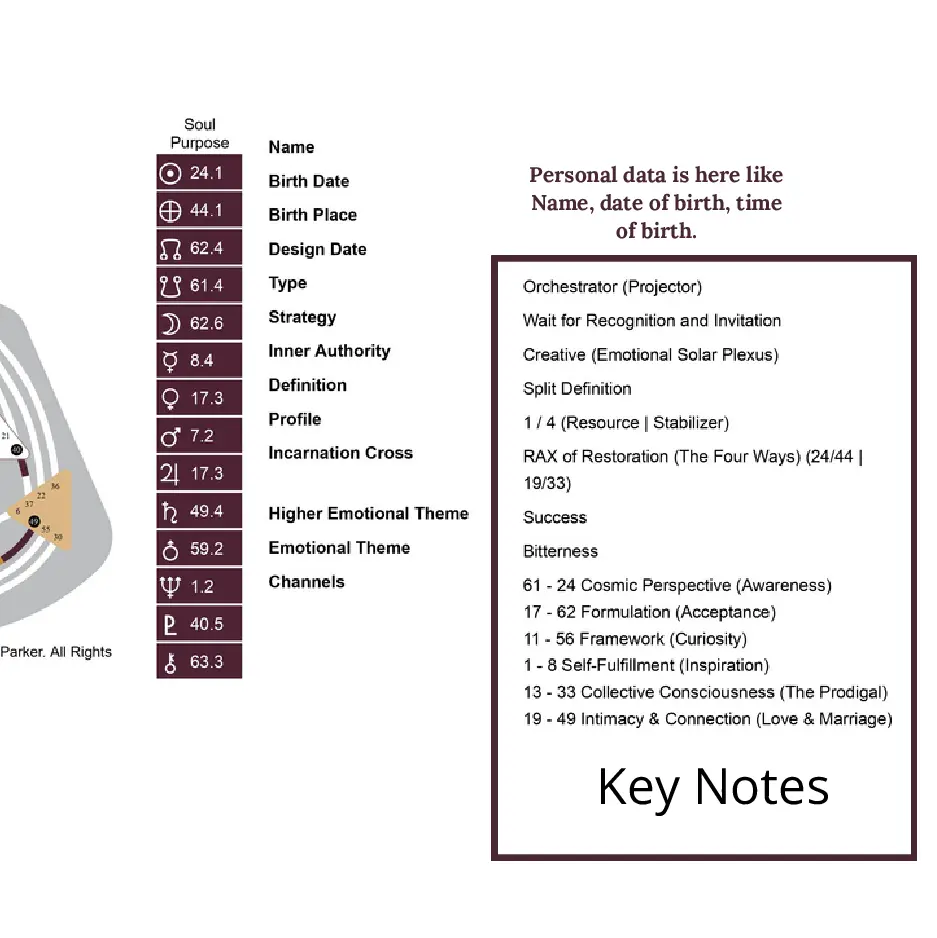
Example: The keynote for Gate 1 might be described as “Expression of the Self,” indicating that individuals with this gate defined often have a drive to express their unique inspiration and identity to the world.
Left Angle Cross
In Human Design, a Left Angle Cross is one of the three variations of Incarnation Crosses. It represents a life theme that is focused on impacting others and the collective. Individuals with a Left Angle Cross in their chart are often driven to bring change or new perspectives to their environment and society at large.
Example: Someone with a Left Angle Cross of Education might feel a strong drive to transform educational systems or spread knowledge in innovative ways.
See also: Incarnation Cross, Right Angle Cross
Life Themes
In Human Design, Life Themes refer to the overarching patterns and experiences that shape an individual’s life journey. These themes are derived from various elements of one’s chart, including the Incarnation Cross, Profile, and defined Channels. Understanding one’s Life Themes can provide insight into recurring patterns, challenges, and opportunities in life.
Example: Someone with the 1/3 Profile might have Life Themes revolving around foundational research and experiential learning through trial and error.
See also: Incarnation Cross, Profile, Channels
Line
In Human Design, Lines refer to the six horizontal lines that make up each Hexagram (Gate). These Lines represent different aspects or stages of the Gate’s energy. In a person’s chart, defined Lines contribute to their Profile and provide specific characteristics or life experiences related to that Gate’s theme.
Example: If someone has Line 6 of Gate 1 defined, they might embody the role of a “Role Model” in relation to creativity and self-expression.
See also: Gates, Hexagrams, Profile
Logic
In Human Design, Logic refers to one of the ways of processing information, typically associated with the Ajna Center. It represents sequential, step-by-step thinking and the ability to recognize and explain patterns. People with strong logical definition in their chart may have a natural capacity for structured thought and explanation.
Example: Someone with the 63-4 Channel (Logic Channel) might excel at breaking down complex concepts into understandable steps.
See also: Ajna Center, Logic Circuit
Logic Circuit
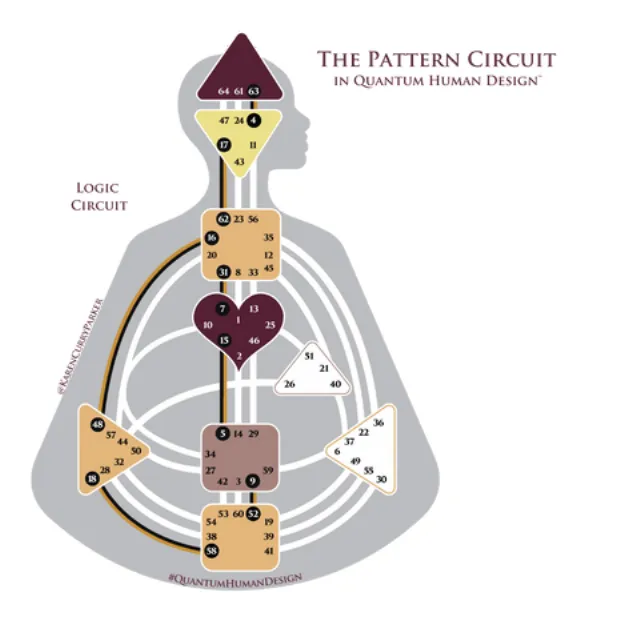
The Logic Circuit is one of the main Circuits in Human Design, representing aspects of human consciousness related to understanding patterns and systems. It is associated with the ability to recognize and explain patterns, as well as to create systems and structures. People with strong Logic Circuit definition often have a natural capacity for sequential thinking and explanation.
Example: Someone with the 63-4 Channel of Logic may learn to use the power of thinking (or questioning) to generate new possibilities and be open-minded to the possibility of change.
See also: Circuits, Channels, Ajna Center
Low Expression
Low Expression in Human Design refers to the less evolved or unconscious manifestation of energies associated with specific gates, channels, or centers in a person’s chart. It represents the potential challenges or negative aspects that can arise when an individual is not fully aligned with or aware of their design. Low Expression often occurs when people are operating from conditioning or fear rather than their authentic nature.
Example: The Low Expression of Gate 44 (The Gate of Energy) might have fear and paralysis that past patterns can’t be overcome and will keep repeating themselves. The challenge is not to get stuck in those patterns and to find the courage to transform pain into power and to be able to be your authentic self.
Lunar
In Human Design, Lunar refers to the influence of the Moon in a person’s chart and its associated energies. The Moon in your chart represents what drives you and why you do what you do.
Example: A person with the Moon in Gate 30 (The Gate of Desire) may be driven by a dream and vision that they are passionate about. The challenge is not to get overwhelmed by it or to burn out by not waiting for Divine Right Timing.
Lunar Cycle
In Human Design, the Lunar Cycle is particularly significant for Reflectors. As Reflectors have no defined Centers, they are advised to wait a full lunar cycle (approximately 28 days) before making major decisions. This allows them to experience themselves through all the different lunar energies and gain clarity.
Example: A Reflector considering a job offer might observe their feelings about it over a full 28-day cycle before making a decision.
See also: Reflector, Strategy
Mandala
In Human Design, a mandala refers to the circular chart that visually represents an individual’s unique energy blueprint. This chart, also called a BodyGraph, illustrates the various centers, channels, and gates that make up a person’s energetic composition according to Human Design theory. The mandala serves as a graphical tool for understanding and interpreting one’s innate characteristics, decision-making process, and life purpose within the Human Design system.
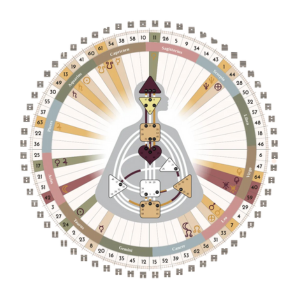
Example: Sarah receives her Human Design reading and is presented with her personal mandala, a circular chart showing nine colored shapes connected by lines. This mandala reveals that she has a Manifesting Generator type with a 5/1 profile, giving her insights into her energy dynamics and potential life strategies.
Manifesting
In Human Design, manifesting refers to the process of bringing ideas or desires into physical reality. It’s expressed through the Throat Center, which is known as the Activation Center in Quantum Human Design. The ability to manifest effectively is influenced by following one’s Type, Strategy, and Authority initially.
Example: A Projector can more easily manifest what they want when they wait for the invitation for the big things rather than pushing forward and burning out.
See also: Throat Center, Type, Strategy
Manifesting Generator (Time Bender)
Manifesting Generator is one of the five Types in Human Design, a hybrid of the Generator and Manifestor Types. They have a defined Sacral Center and at least one motor connected to the Throat.
As a Human Design Manifesting Generator, your strategy for success is to Inform then Respond.
Example: A Manifesting Generator has a gut-level, in-the-moment response that lets them know whether something is right for them or not, through their Sacral Authority. They then need to inform (that’s not asking permission by the way) those around them so that their creative flow doesn’t get interrupted.
See also: Type, Generator, Manifestor, Strategy
Manifestor (Initiator)
Manifestor is one of the five types of human design, characterized by a motor directly connected to the throat center and an open sacral center. Manifestors are designed to initiate action and inform others about what they’re doing. Their Strategy is to inform before acting, and their signature is peace when living in alignment.
Example: A Manifestor might come up with a new business idea, inform their potential partners about it, and then start implementing the plan.
See also: Type, Strategy, Inform
Mental
In Human Design, Mental typically refers to the Ajna Center and the Head Center, which are associated with mental processes, thoughts, and inspiration. The Mental components of a chart indicate how an individual processes information, forms concepts, and experiences mental pressure.
Example: Someone with a defined Ajna Center might have fixed ways of thinking and conceptualizing ideas.
See also: Ajna Center, Head Center
Mind
In Human Design, the Mind typically refers to the Ajna Center, one of the nine energy Centers in the Bodygraph. The Ajna Center is associated with mental concepts, beliefs, and certainty. When defined, it provides consistent mental processing and fixed ways of thinking. When undefined, it can be more open to different perspectives but may also experience mental pressure or uncertainty.
Example: Someone with a defined Ajna Center might have strong, consistent mental concepts and ways of thinking about the world.
See also: Centers, Ajna Center
Motors
In Human Design, Motors refer to the energy Centers that provide consistent motivation and drive. There are four Motor Centers: the Root, Sacral, Solar Plexus, and Will/Heart/Ego. These Centers, when defined, provide different types of energy and pressure that can drive action and decision-making.
Example: Someone with a defined Sacral Motor would have consistent access to life force energy for work and creativity.
See also: Centers, Root Center, Sacral Center, Solar Plexus Center, Heart/Ego Center
Mutation
In Human Design, mutation refers to the evolutionary changes occurring in human consciousness and energetic makeup over time. It’s believed that these mutations affect the way energy flows through the various centers and channels in the Human Design chart. Mutations are thought to influence both individual and collective human experiences, potentially leading to new ways of interacting with the world and processing information.
Example: The “Global Cycle” in Human Design theory suggests that humanity is currently undergoing a mutation in the Solar Plexus center, shifting from a tribal, emotionally-driven consciousness to a more individualized awareness. This mutation is believed to be affecting how people relate to each other emotionally and make decisions, potentially leading to new social structures and ways of living.
To research other terms:
Has This Human Design Glossary Inspired You to Explore Your Human Design More Deeply?
To find out what your Human Design is, why not download your FREE Human Design chart
Remember that we all have ALL of the chart. If the Gate is colored in or defined, it’s part of your Soul Curriculum. If it’s white or undefined, it means you learn about this Gate through relationships with others or through the Transits.
At its core, Human Design is a unique system that offers profound insights into your inner self and how you interact with the world around you. Your Human Design chart is a valuable tool that can help you understand your true nature, discover your strengths and weaknesses, and unlock your full potential.
By downloading and reviewing your unique Human Design Chart you are embarking on a journey of self-discovery that will empower you to make conscious choices in all aspects of your life. Your chart is an Energy Blueprint of your unique energy configuration and contains valuable information about your personality traits, your natural talents, and your life purpose. With this knowledge, you’ll navigate life’s challenges with greater ease and clarity.
Human Design is a deeply empowering system that encourages us to embrace our true selves, rewrite our personal narrative, and live in alignment with our inner wisdom. When we align with our authentic nature, we tap into a wellspring of creativity, joy, and fulfillment that flows effortlessly through us.
There’s More – How To Learn More About Human Design
If you are trying to learn and apply Human Design to your life circumstances, but traditional Human Design rings a little off-key, you don’t quite connect with it, or it feels heavy as you read it. We invite you to explore training options with Quantum Human Design, internationally respected and time-tested training courses.
These courses will empower you to create a life filled with more money, better relationships, health and vitality, a rewarding career, and experience profound personal transformation.
Explore the life-changing options in our Quantum Human Design School
Curious about the difference between Human Design and Quantum Human Design? Karen Curry Parker explains it in this video: